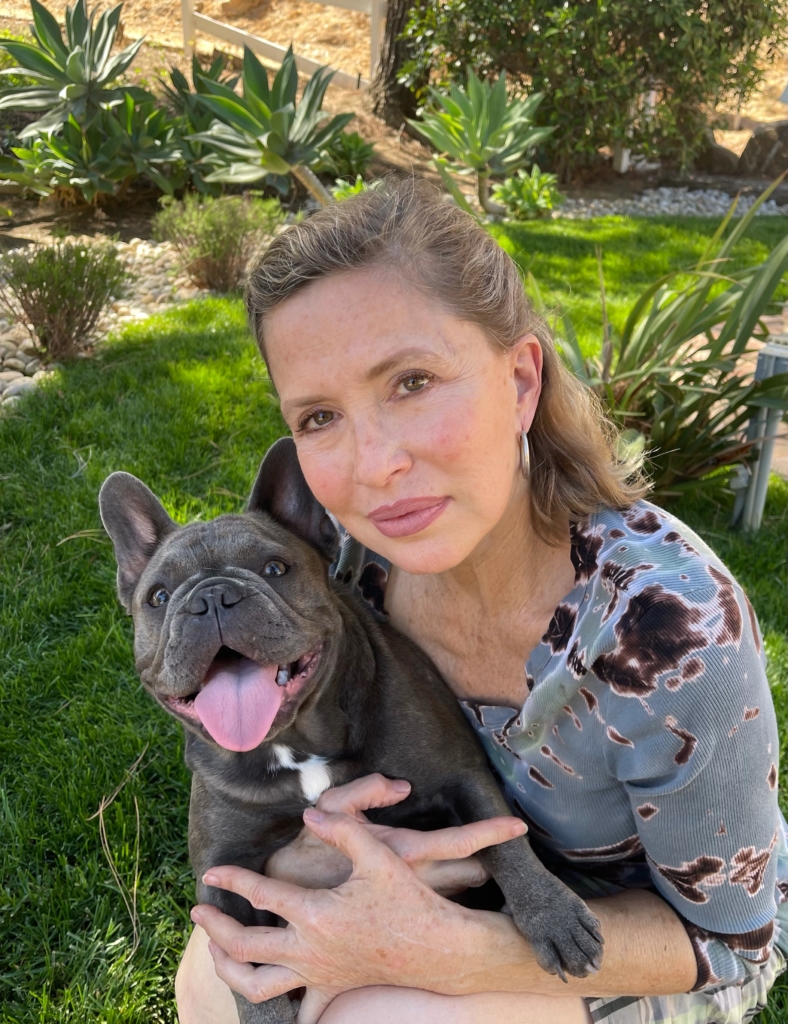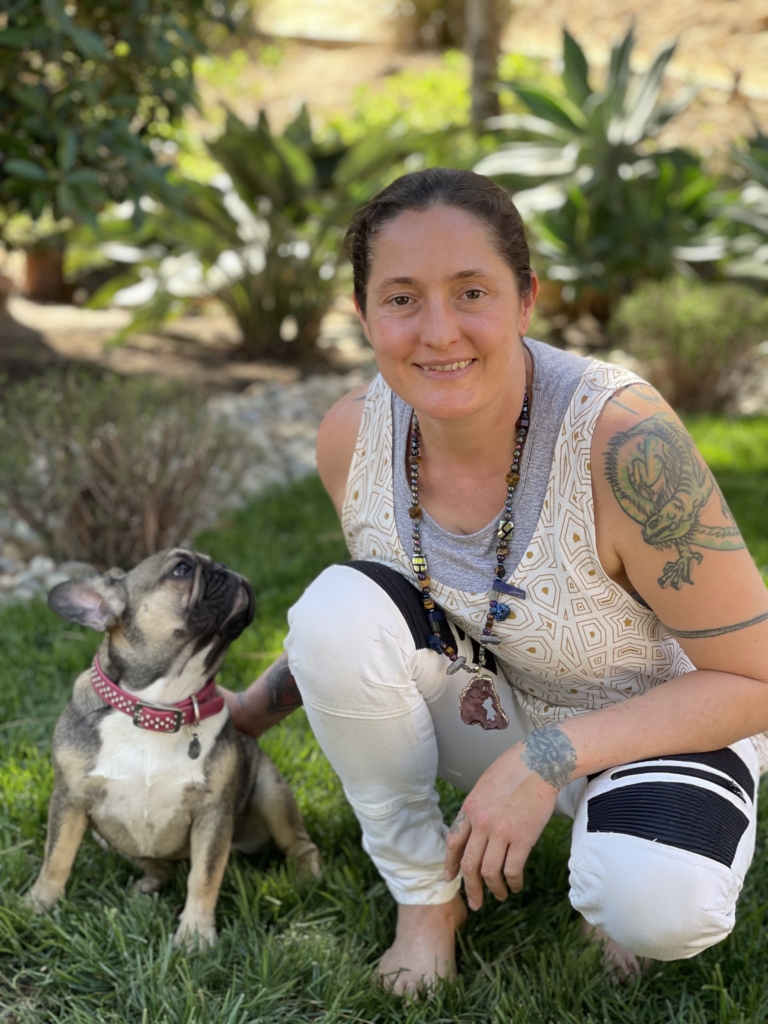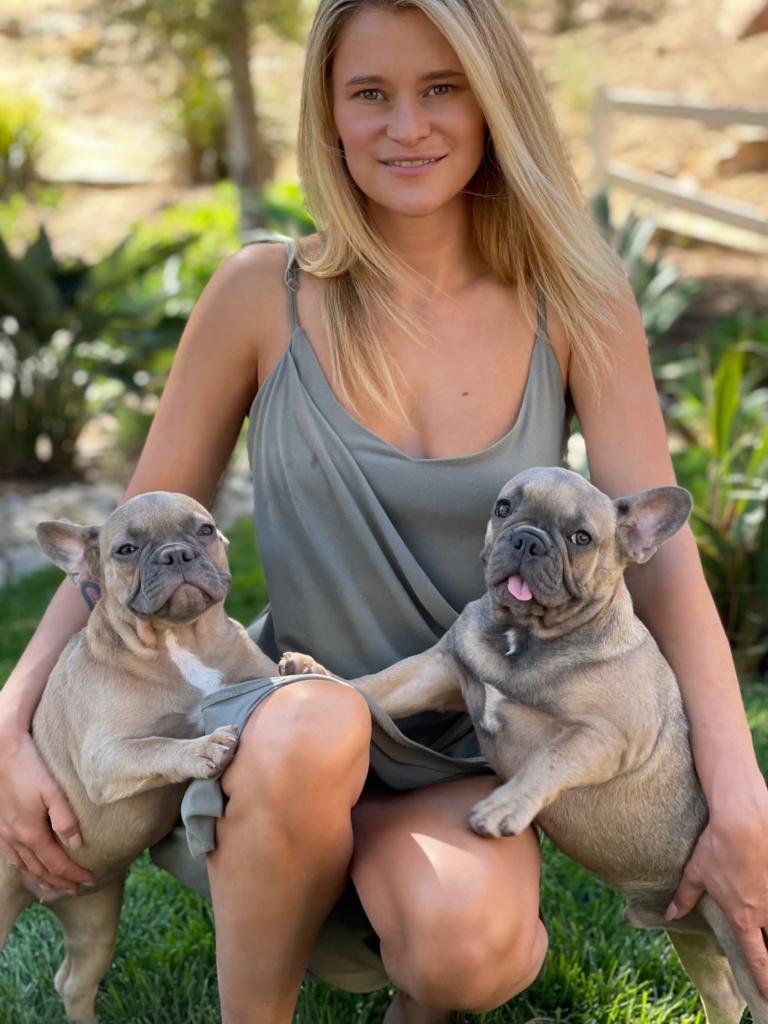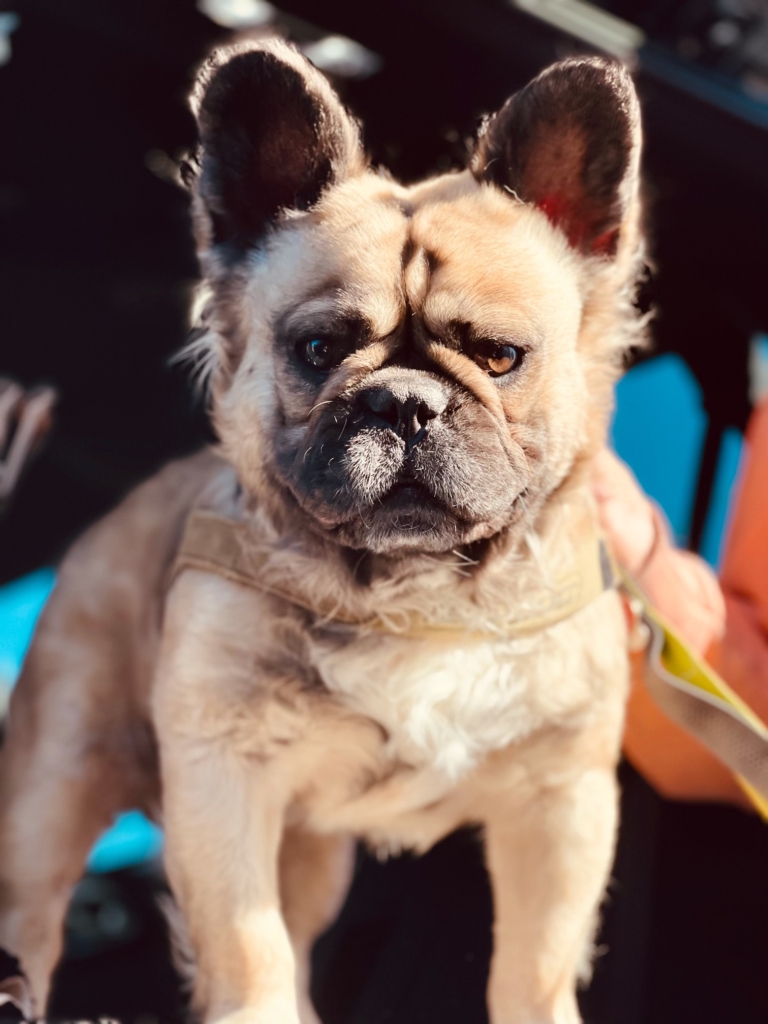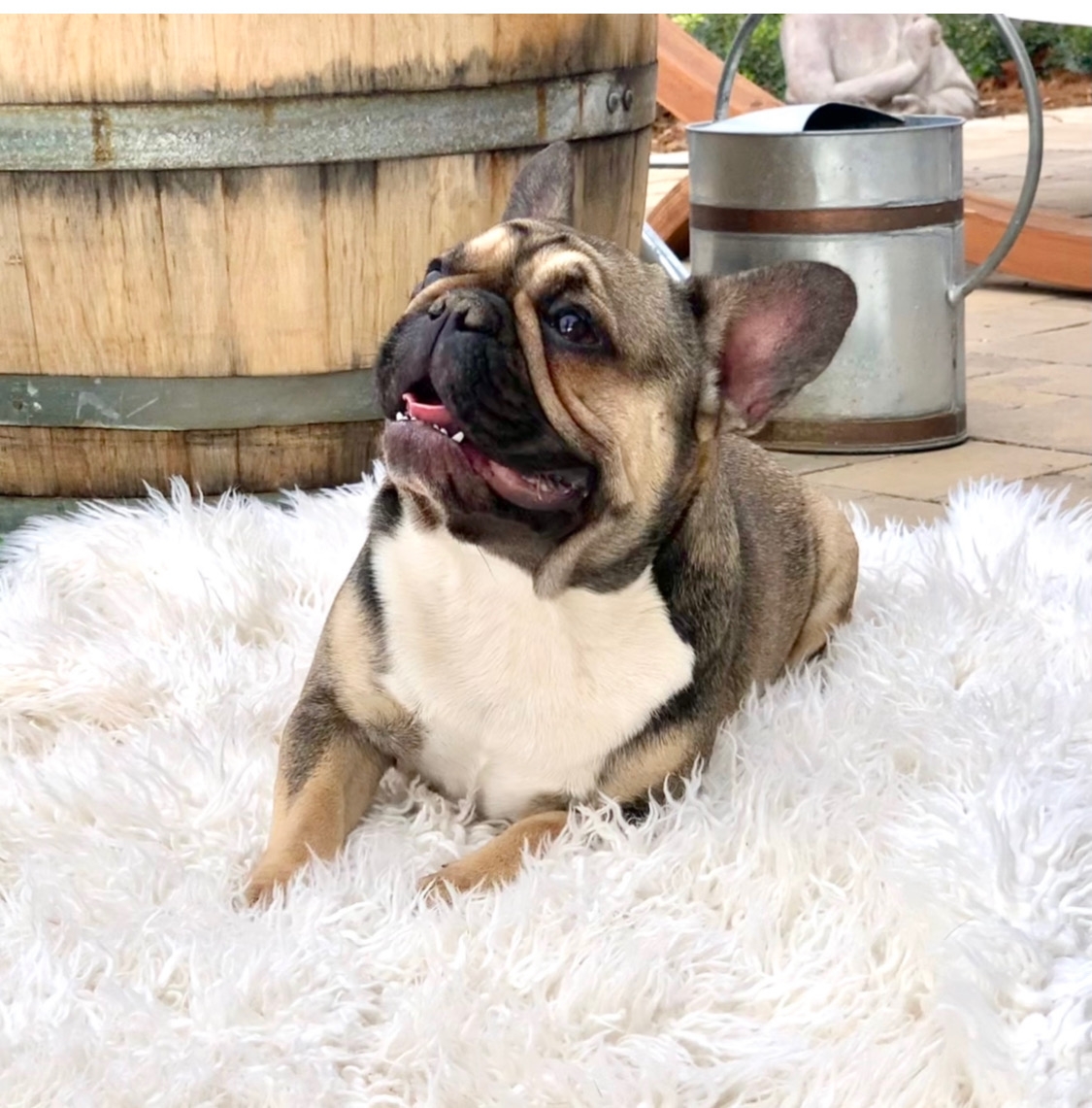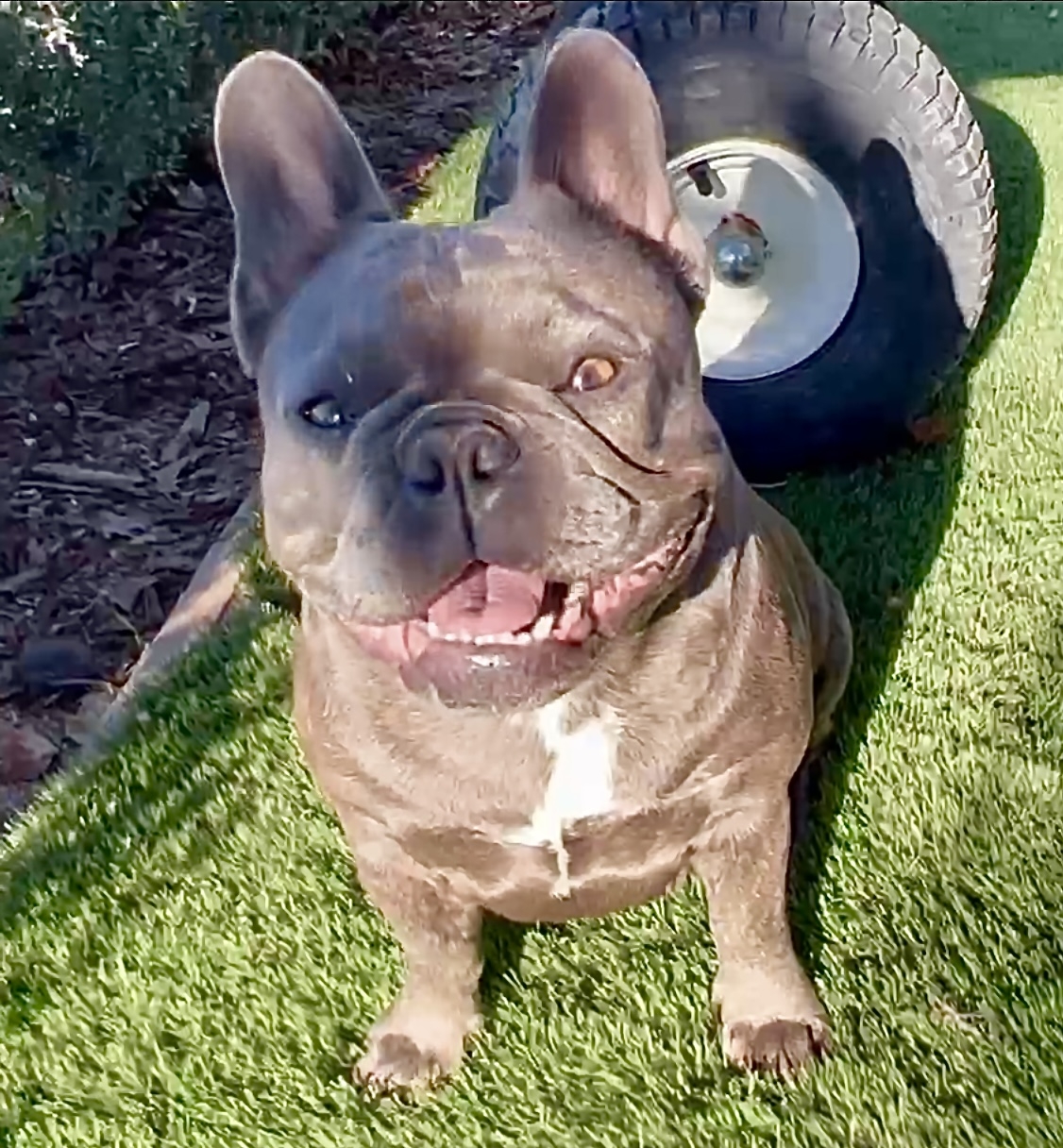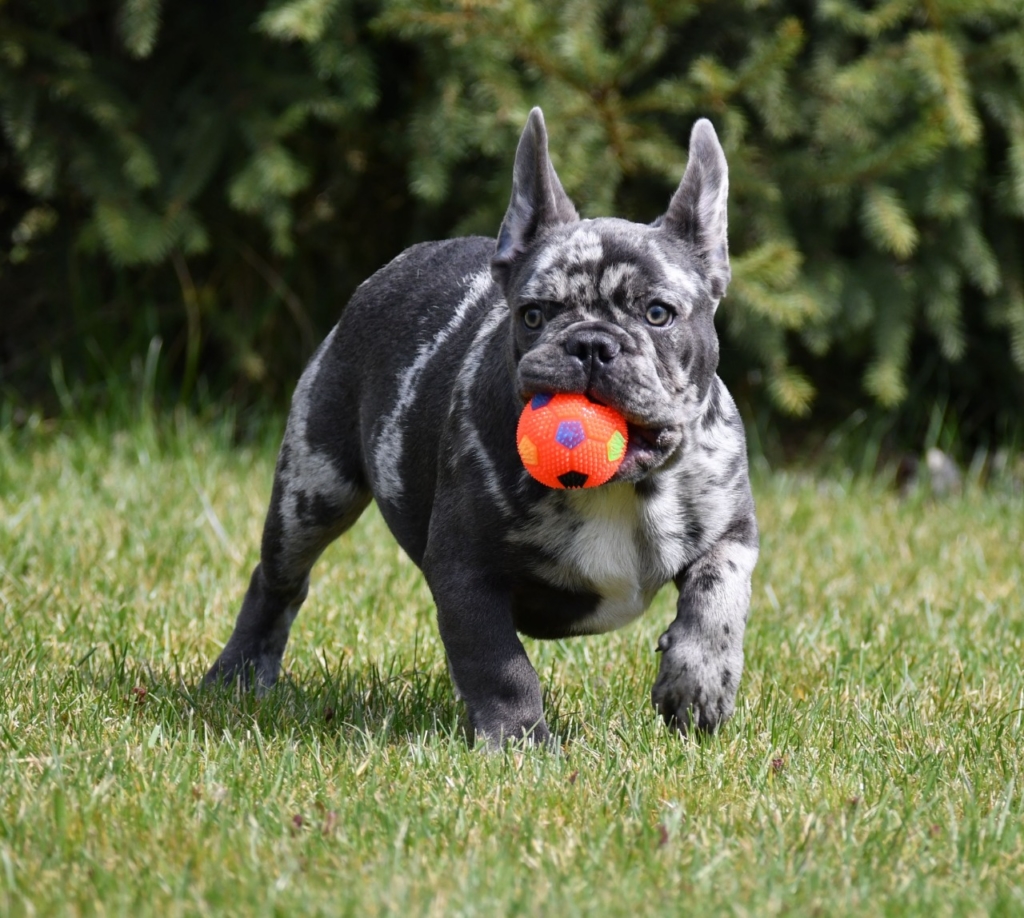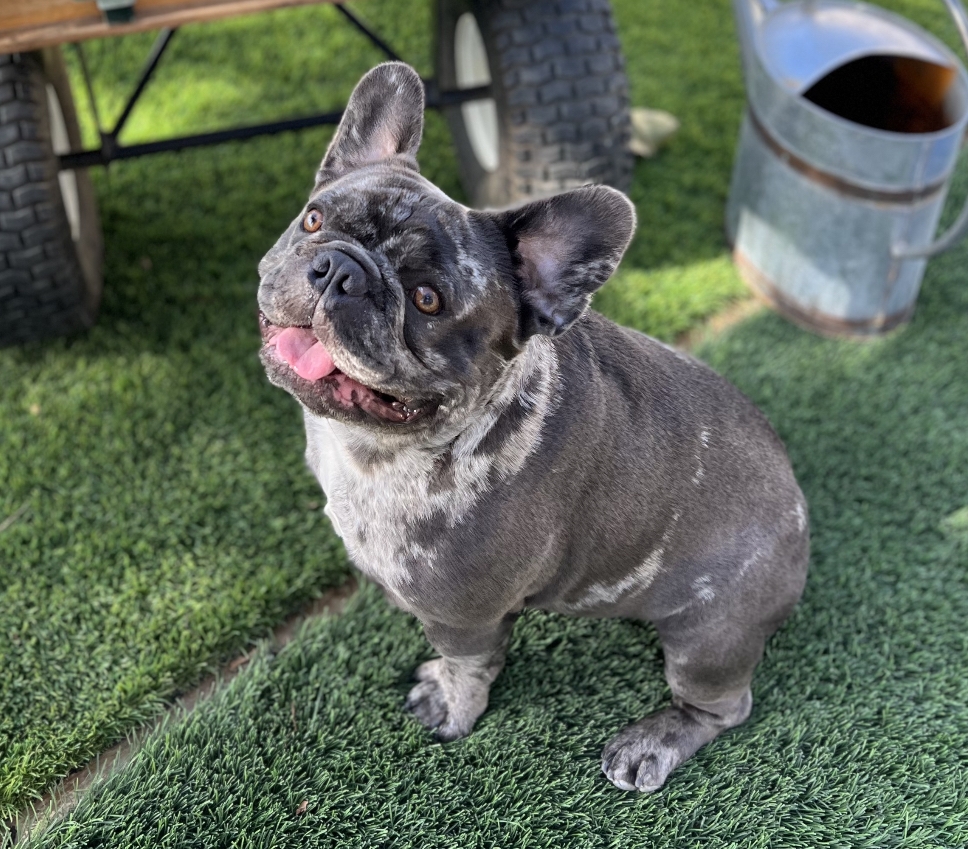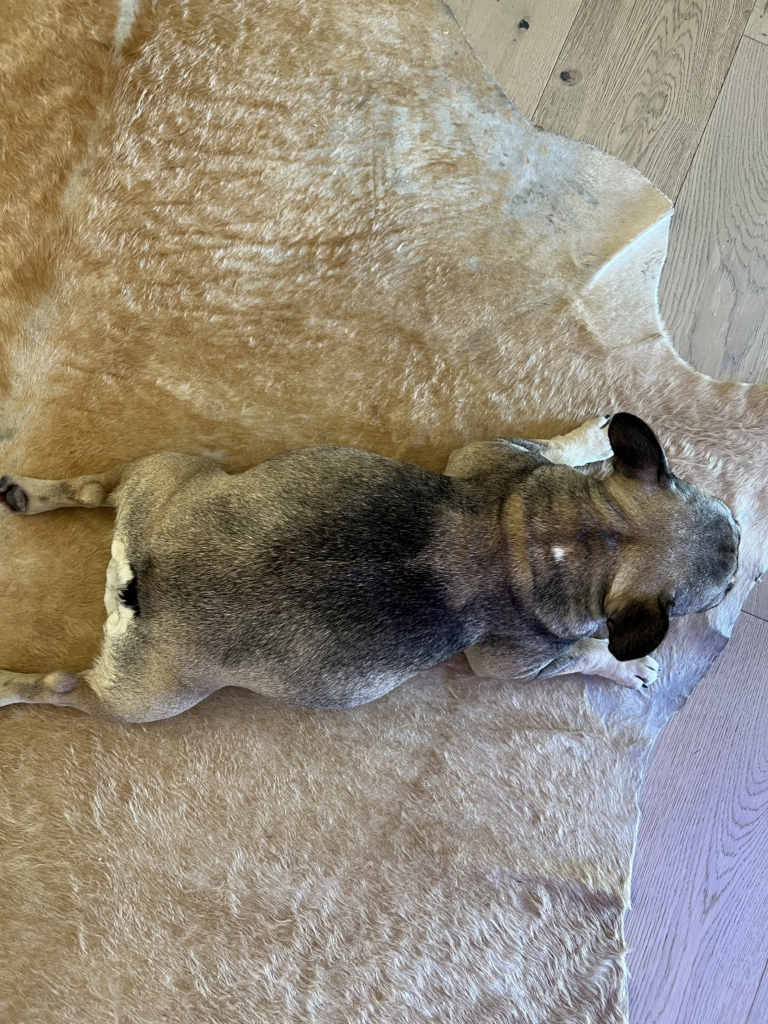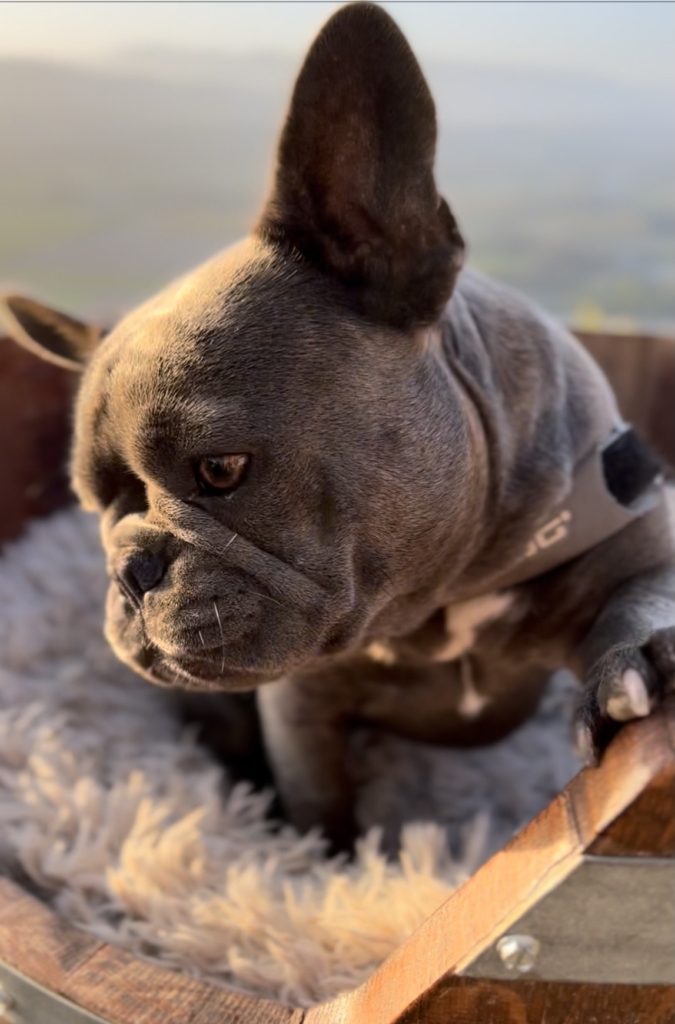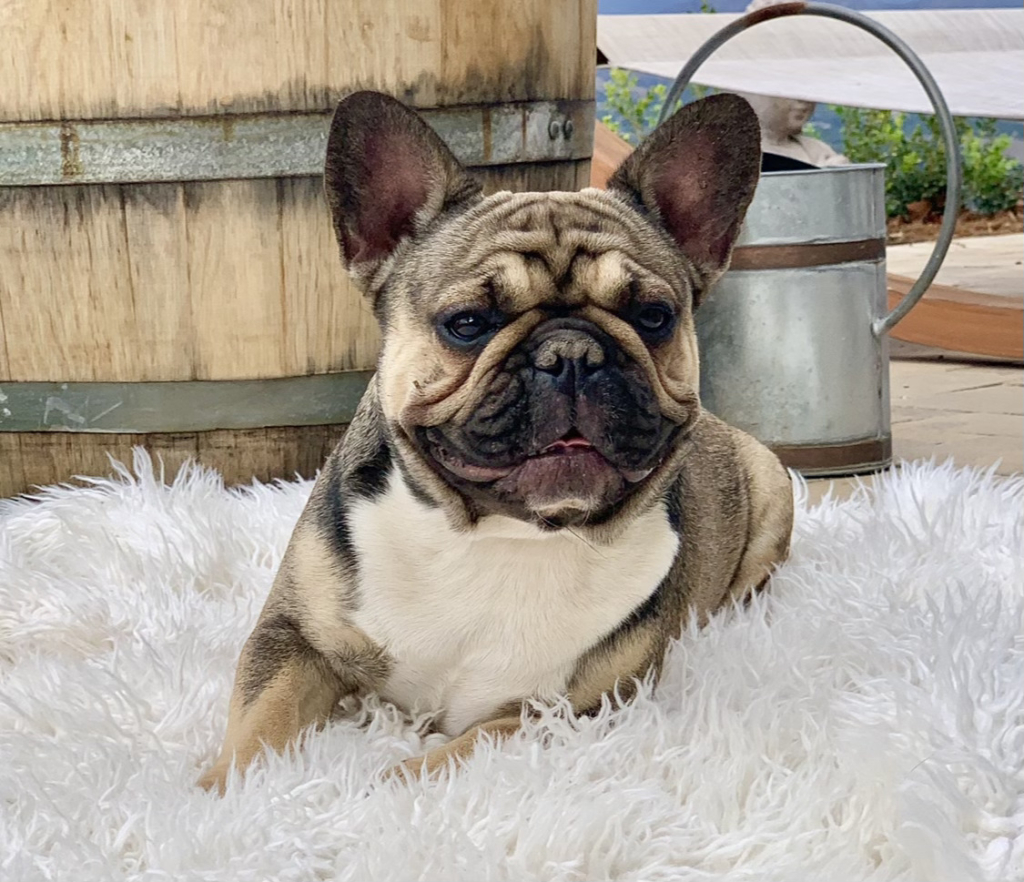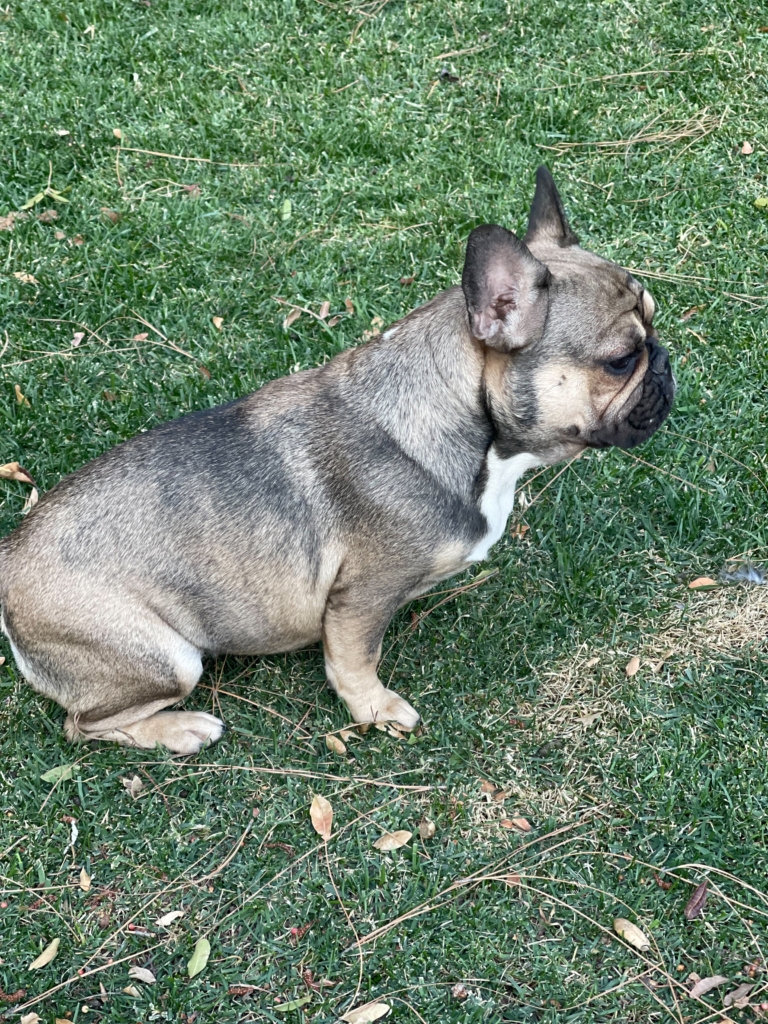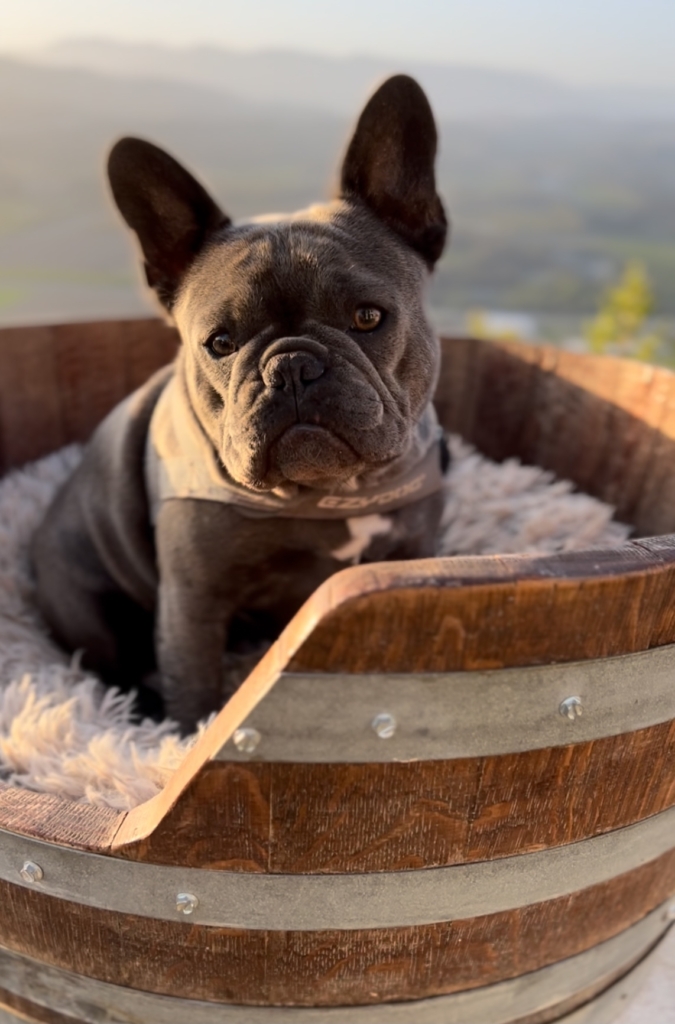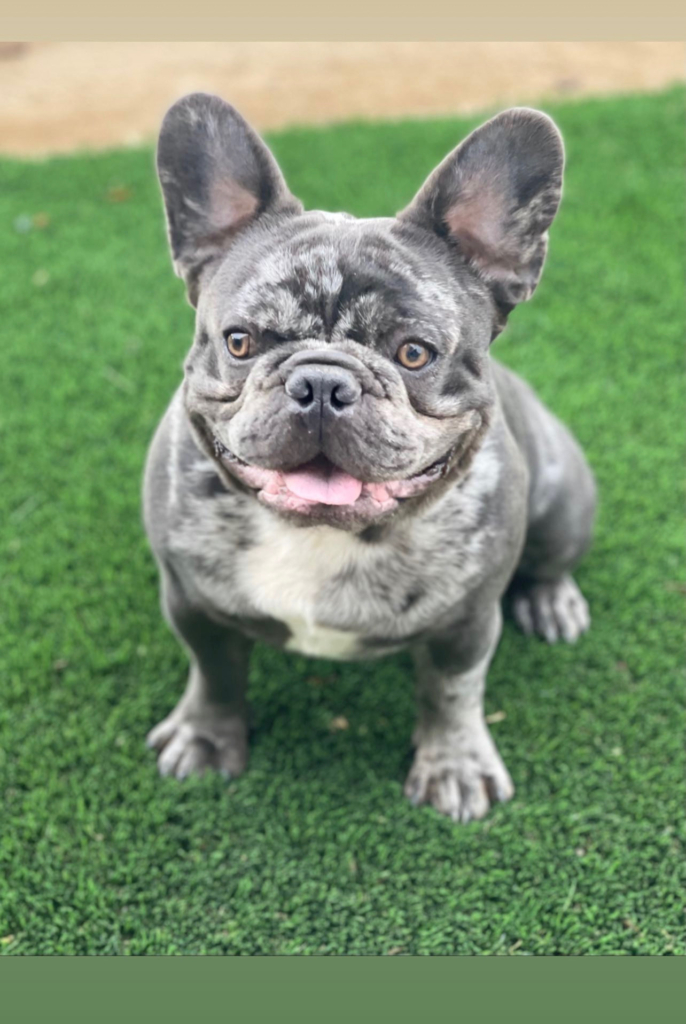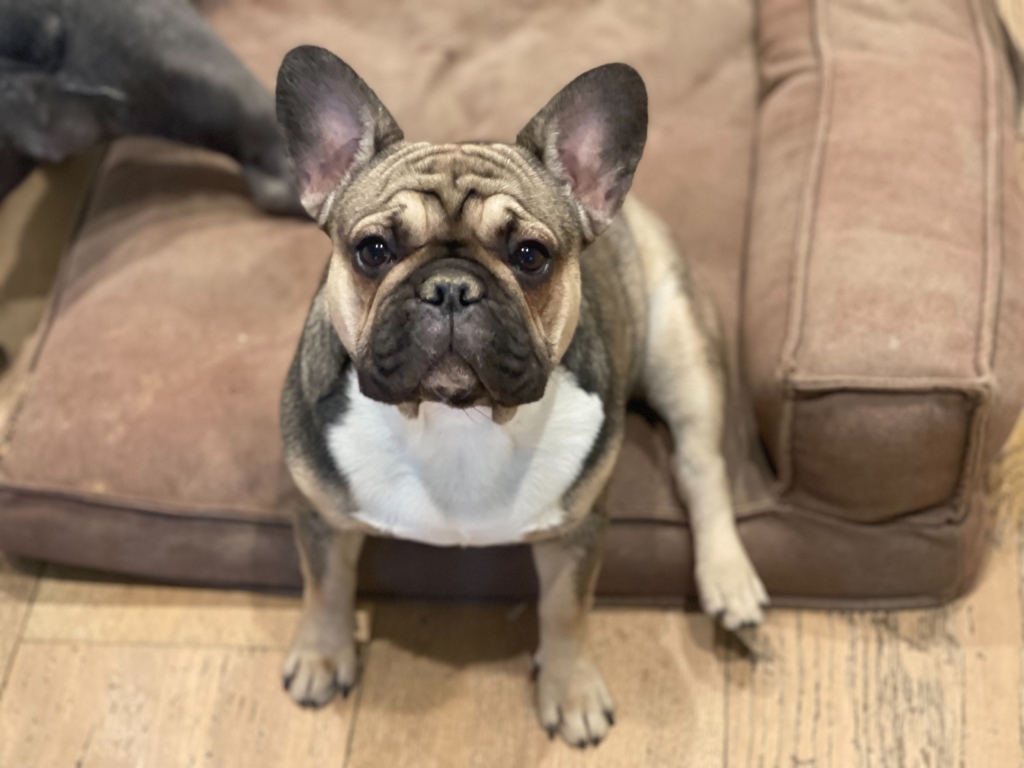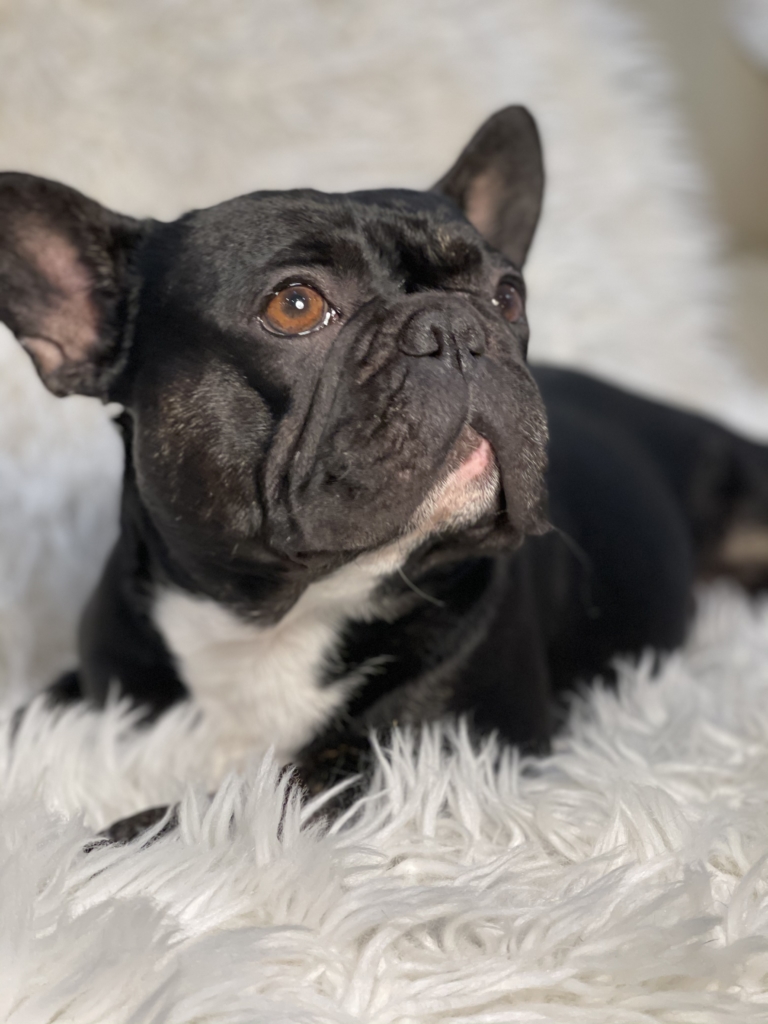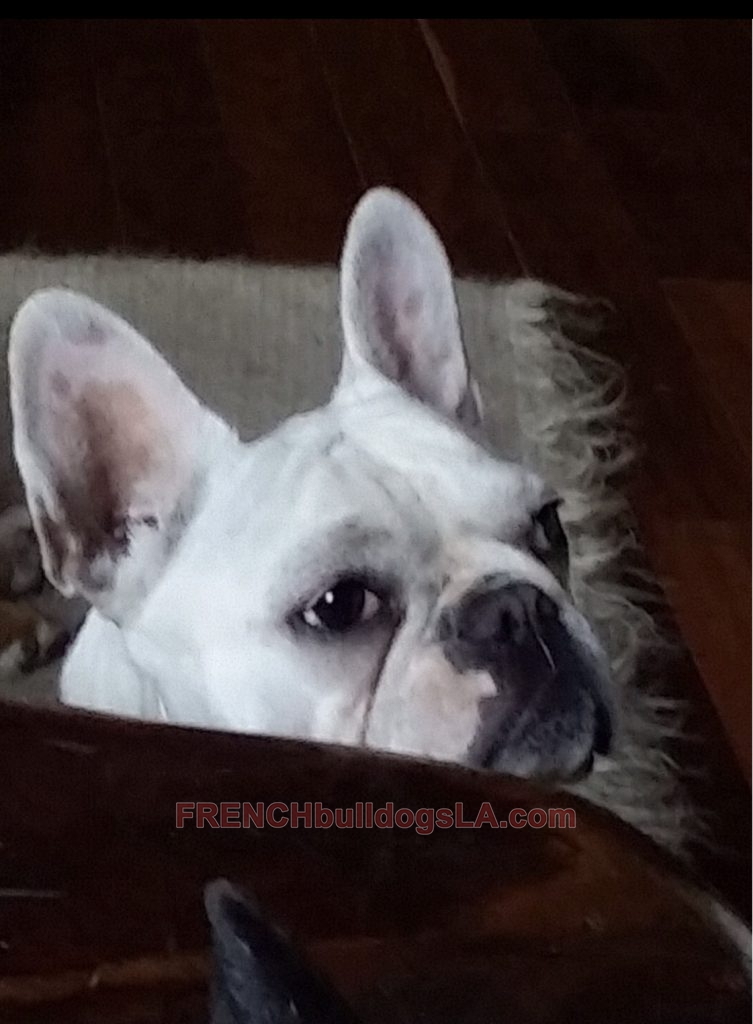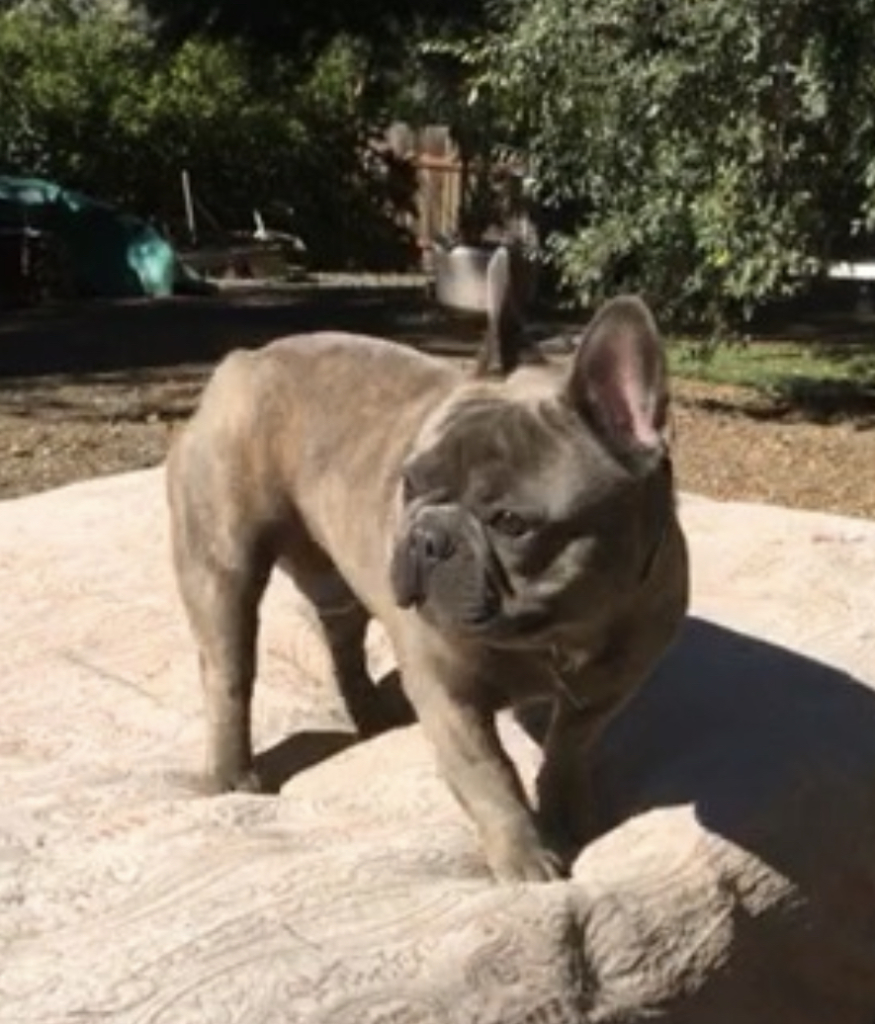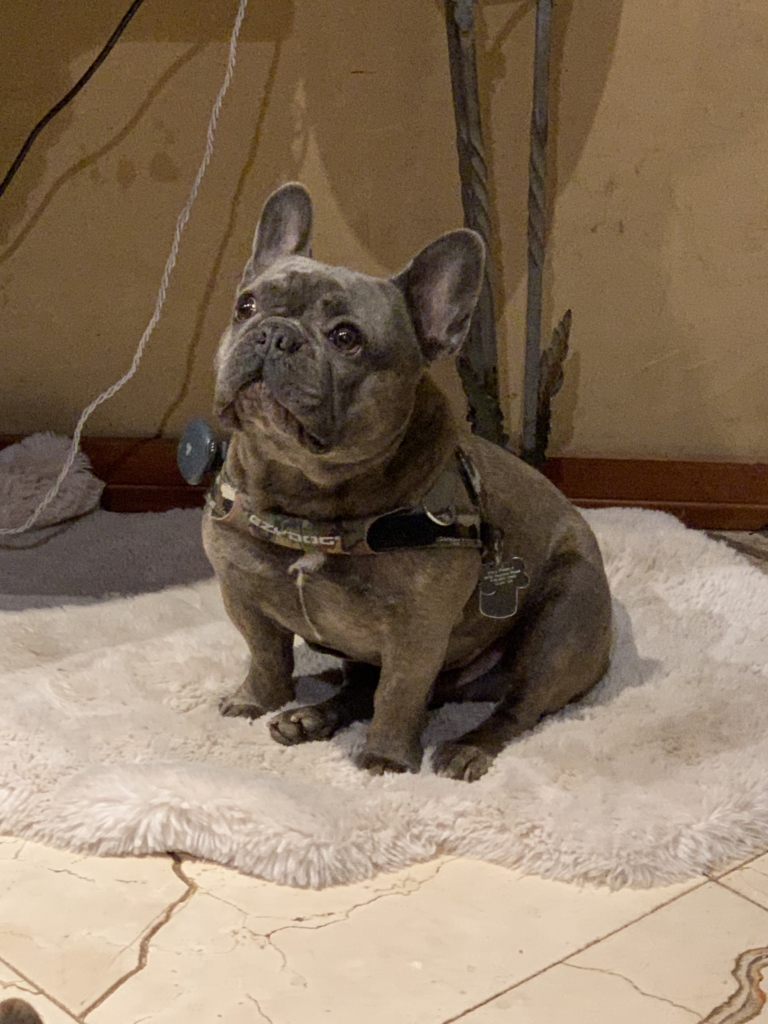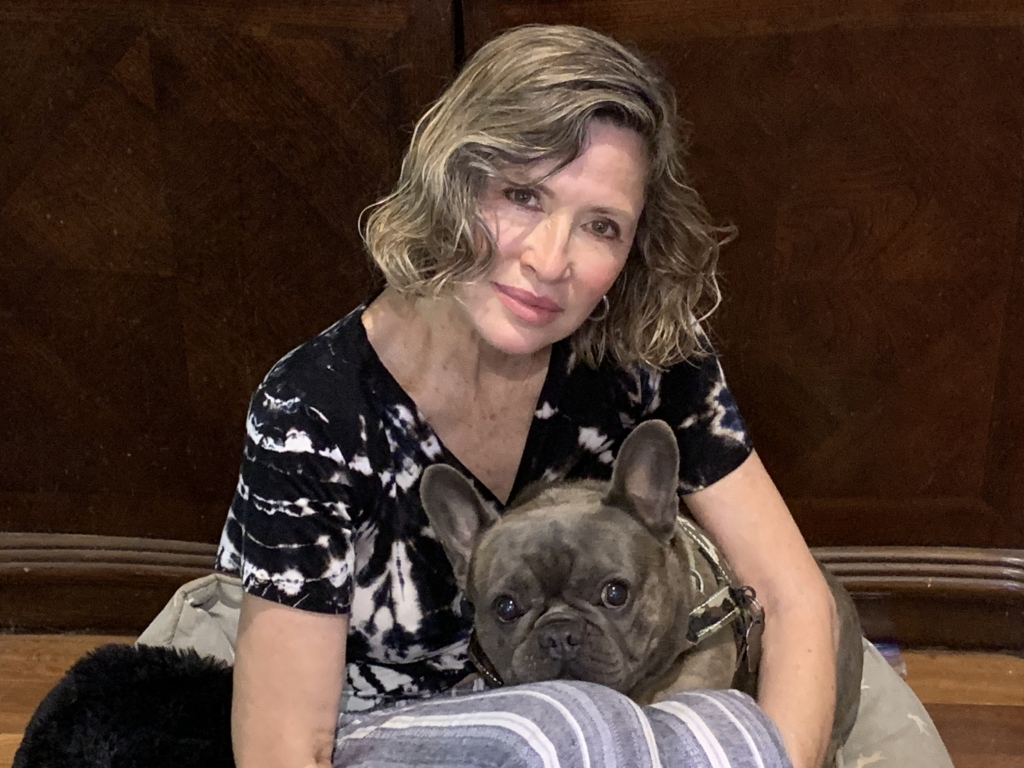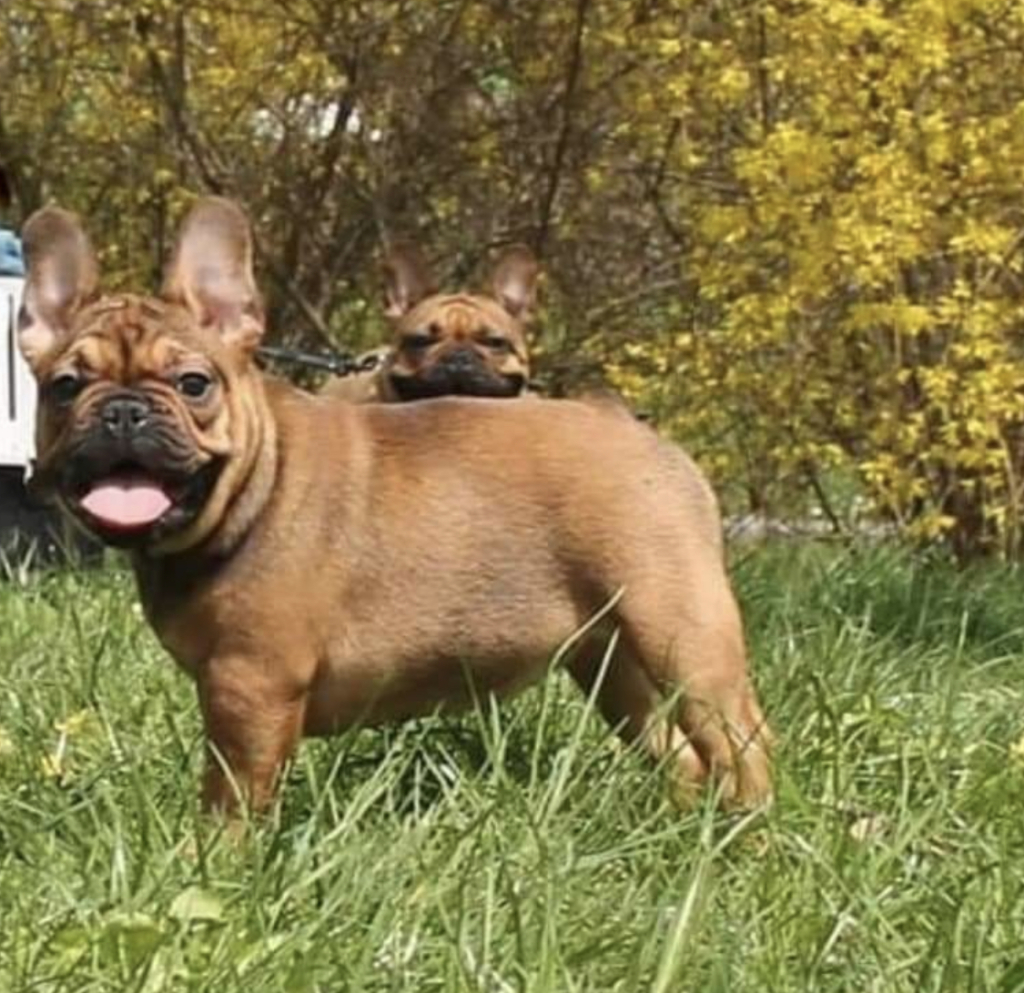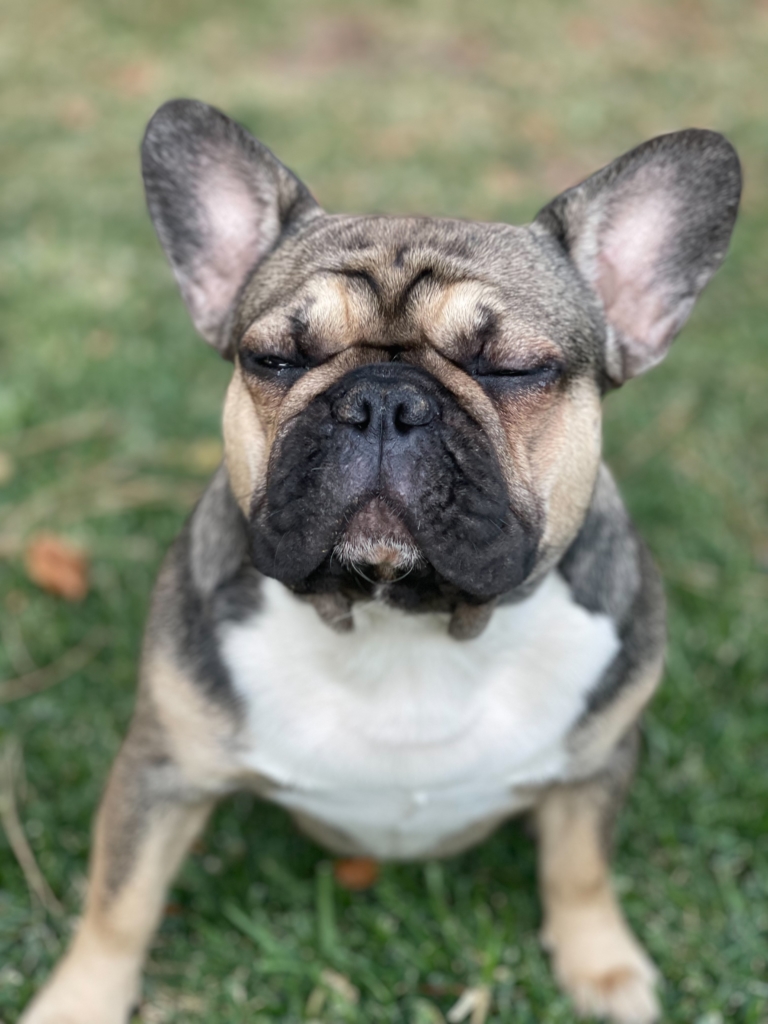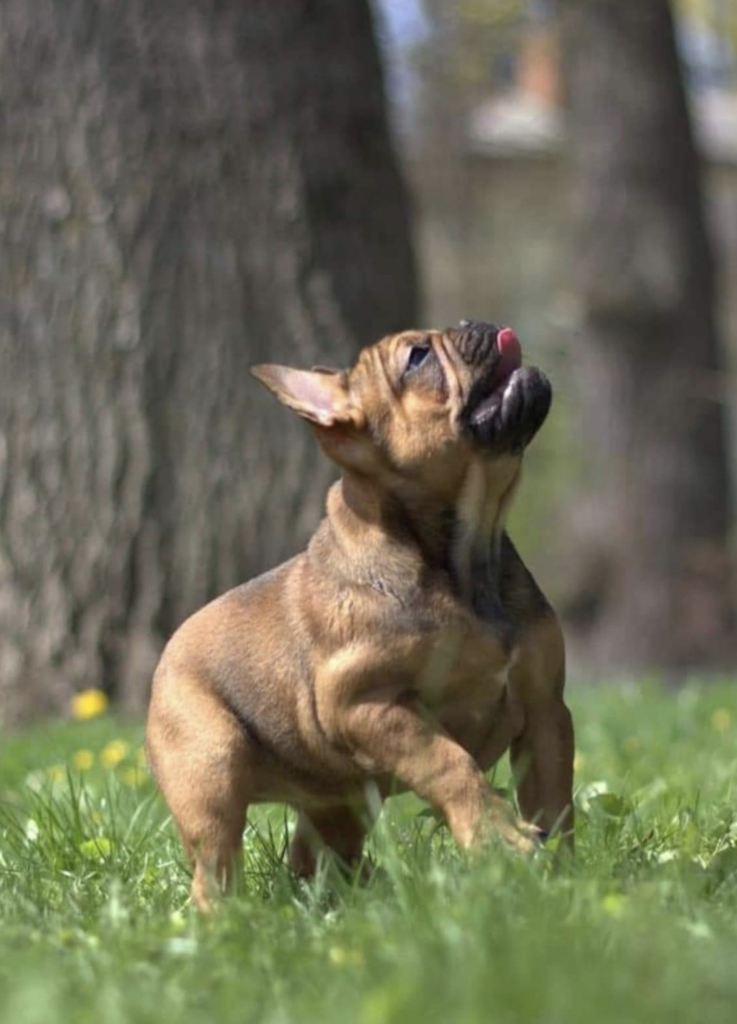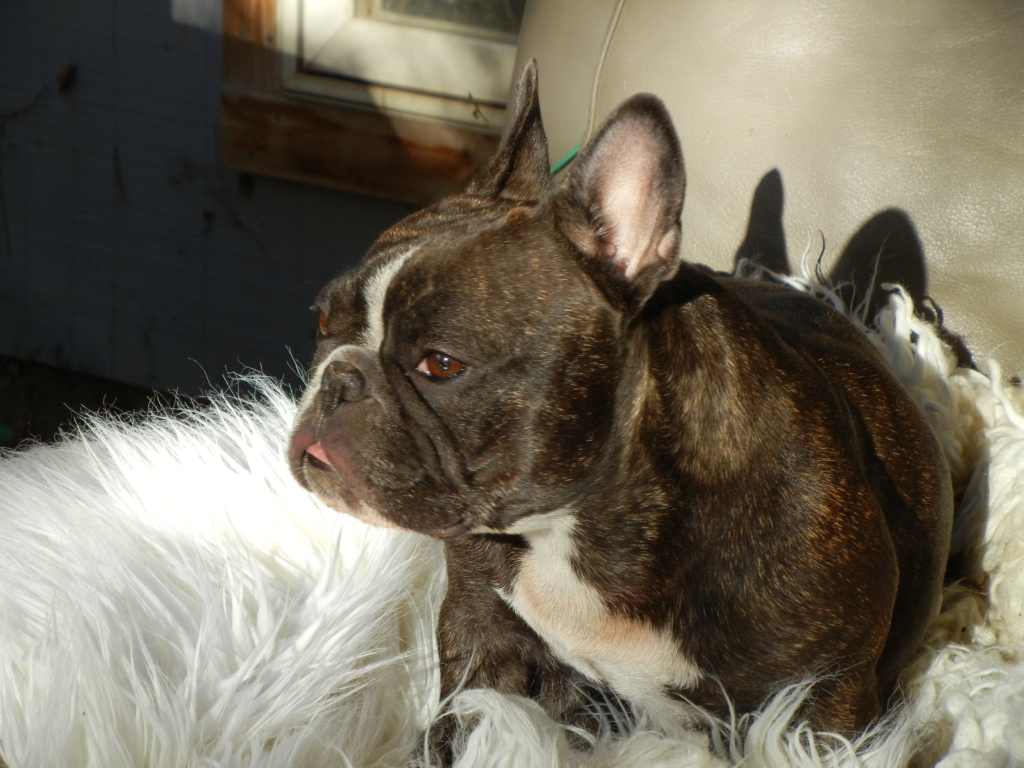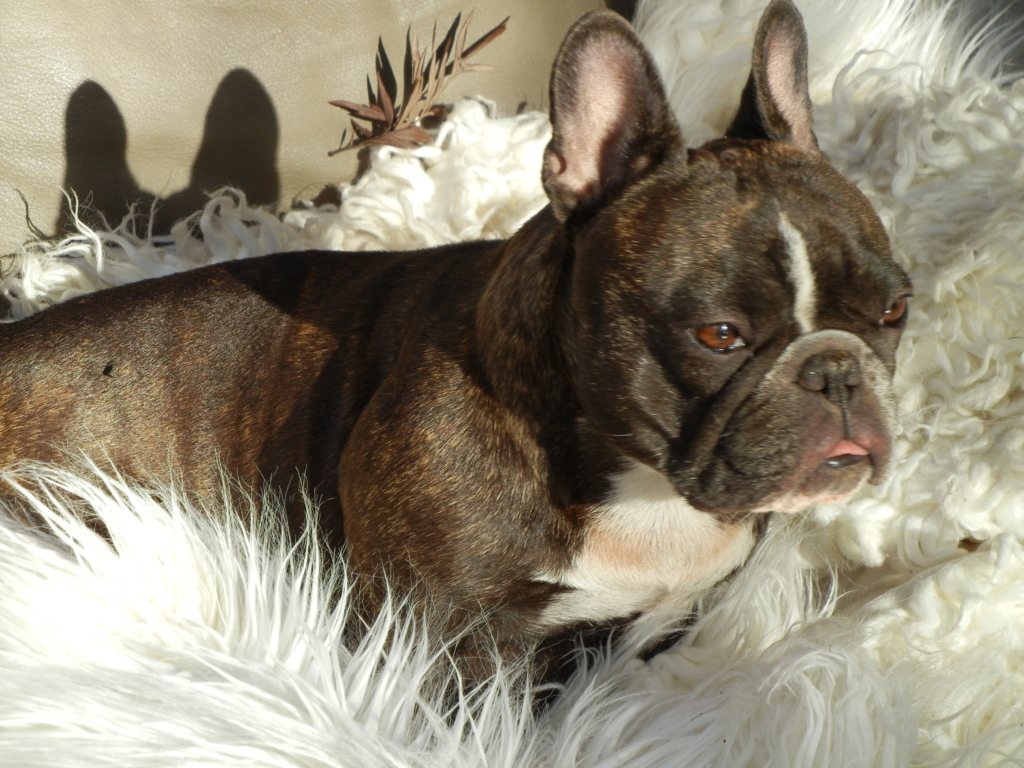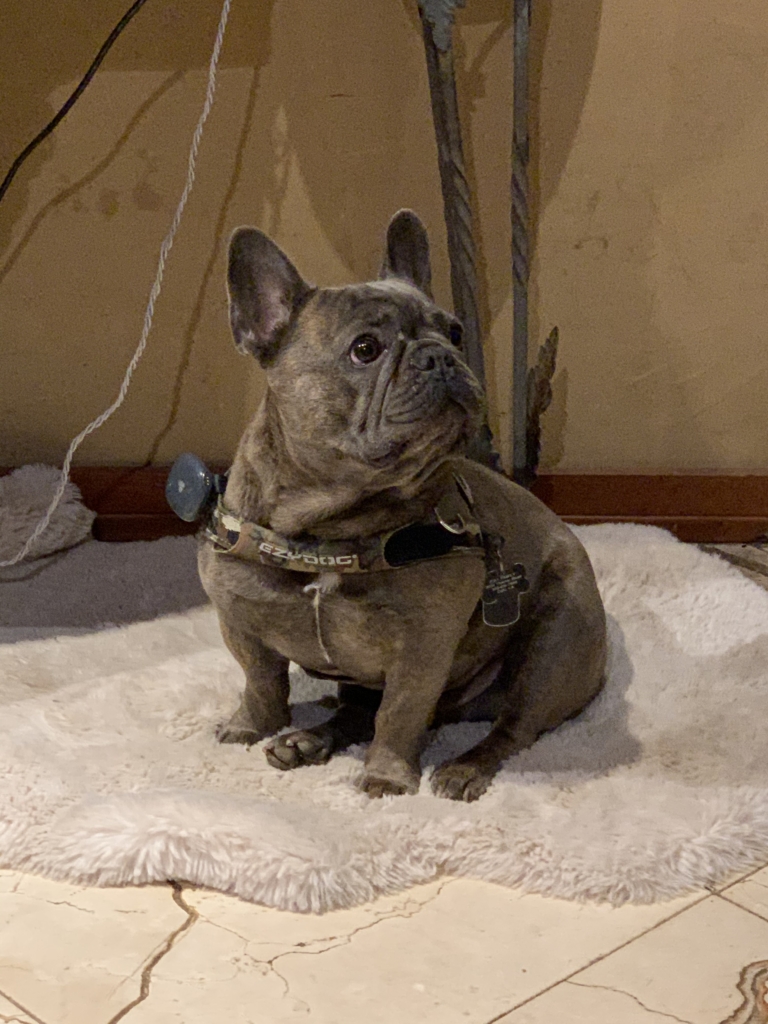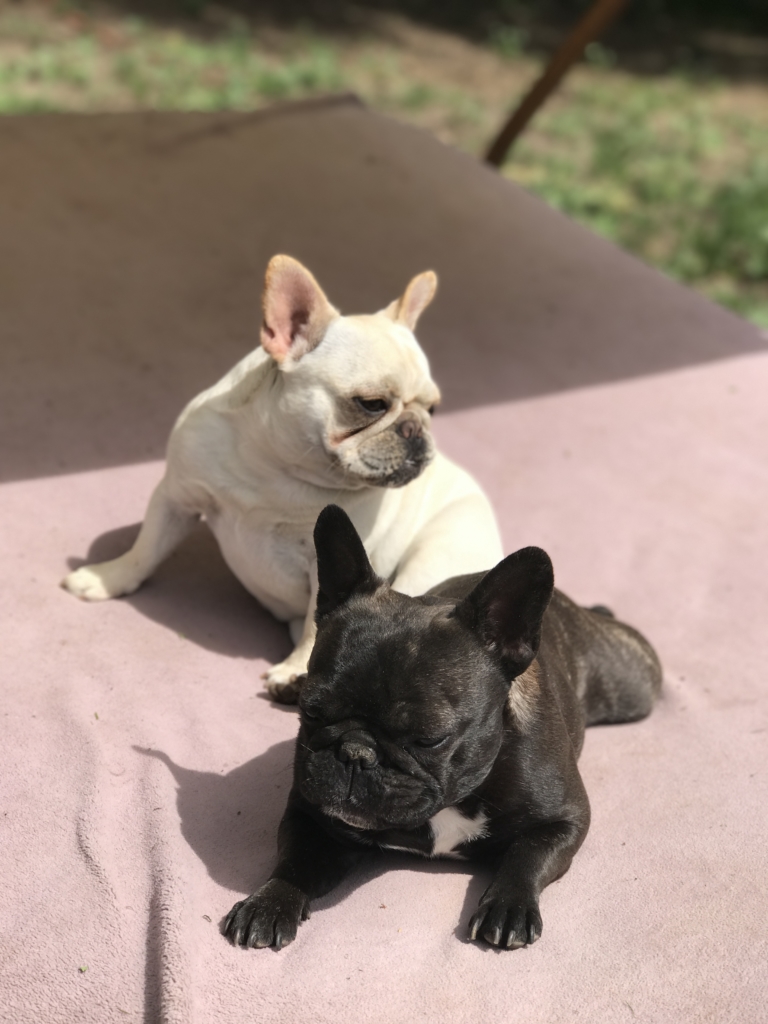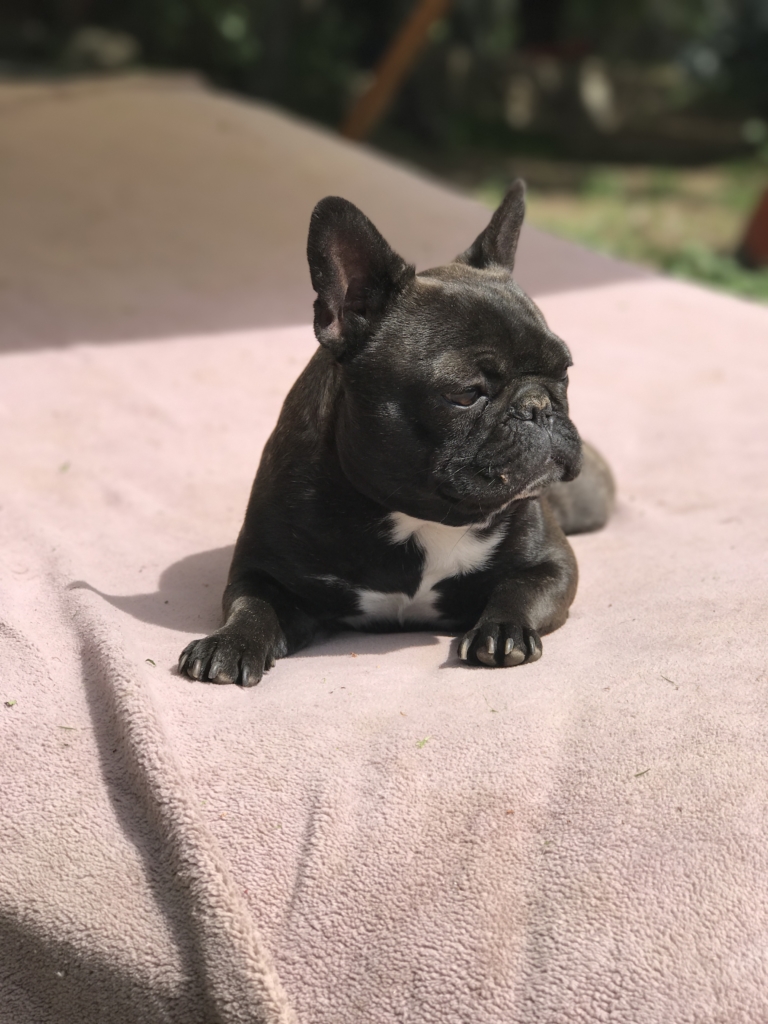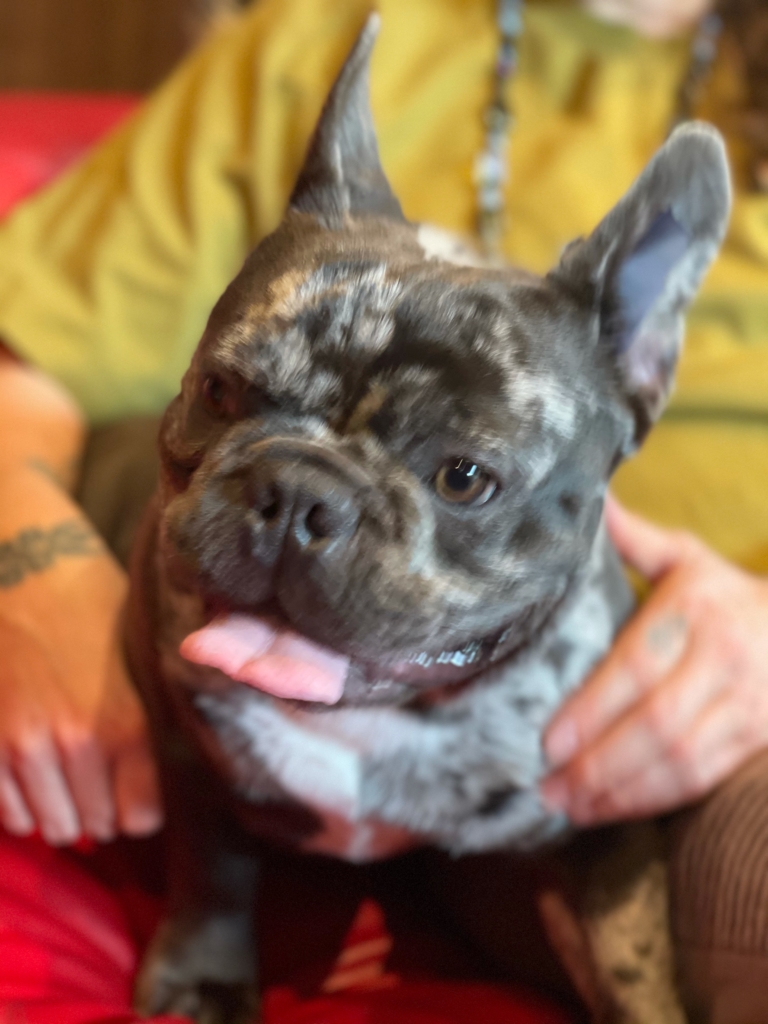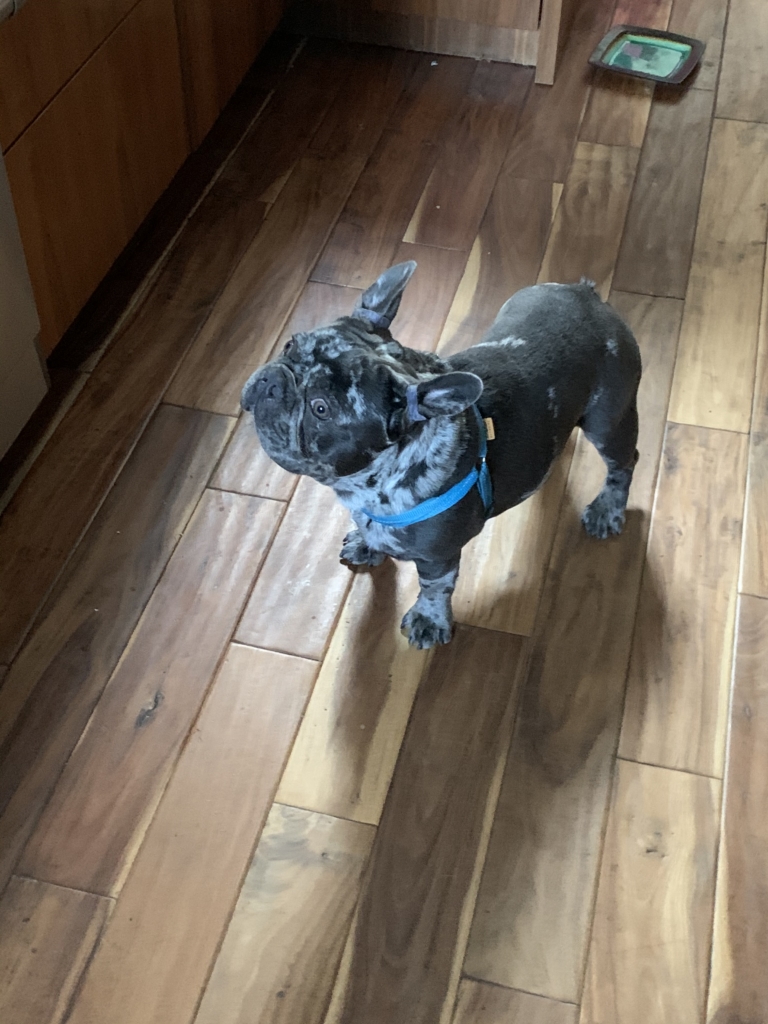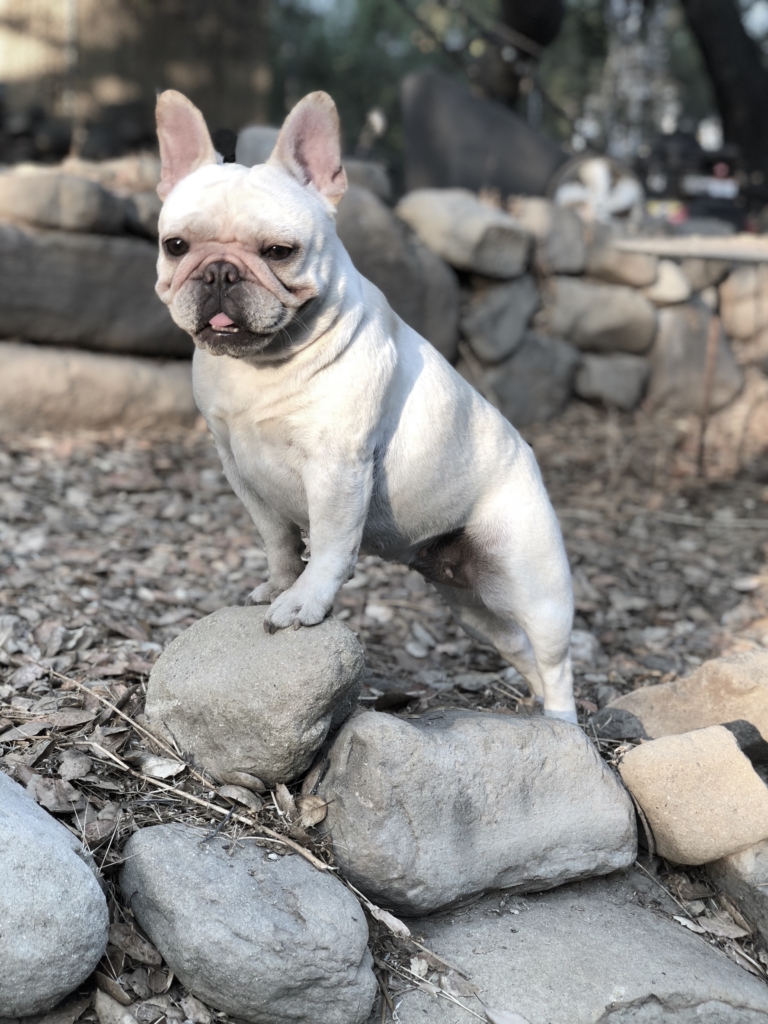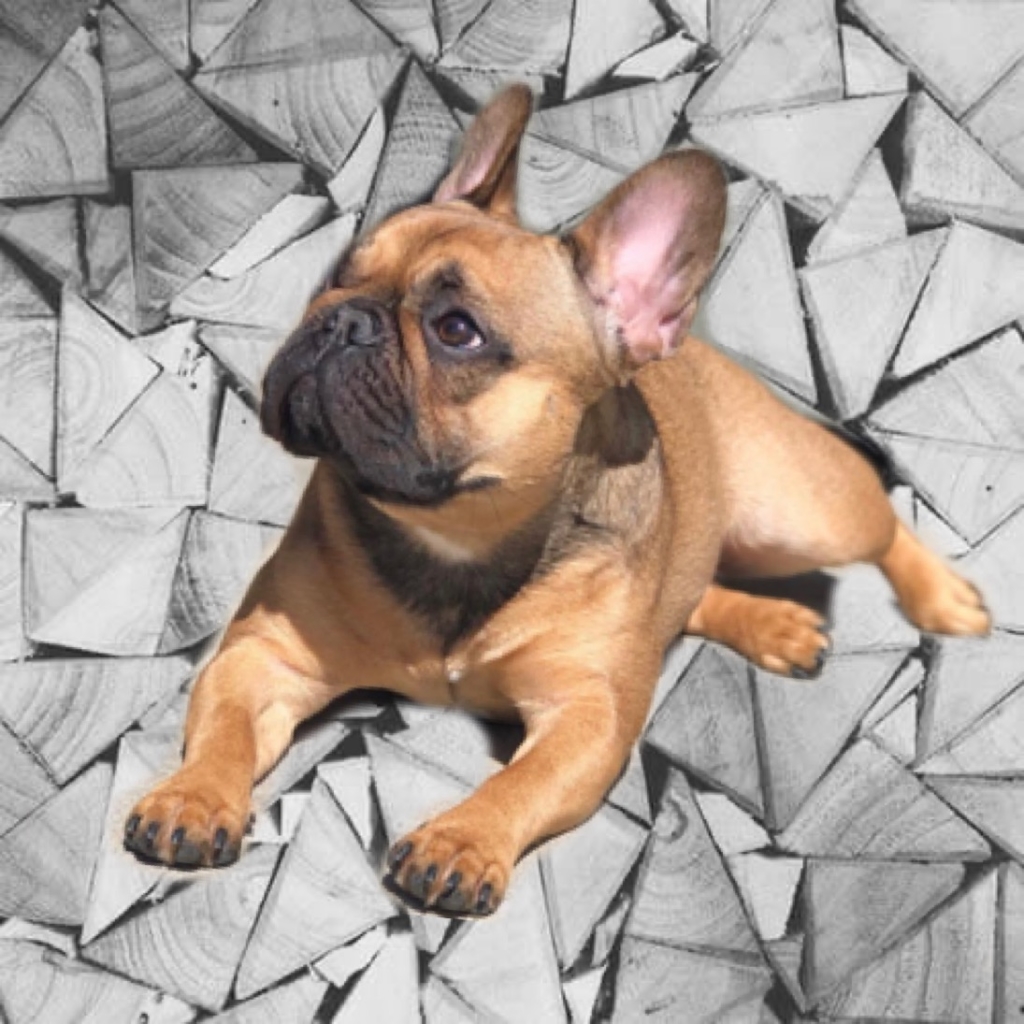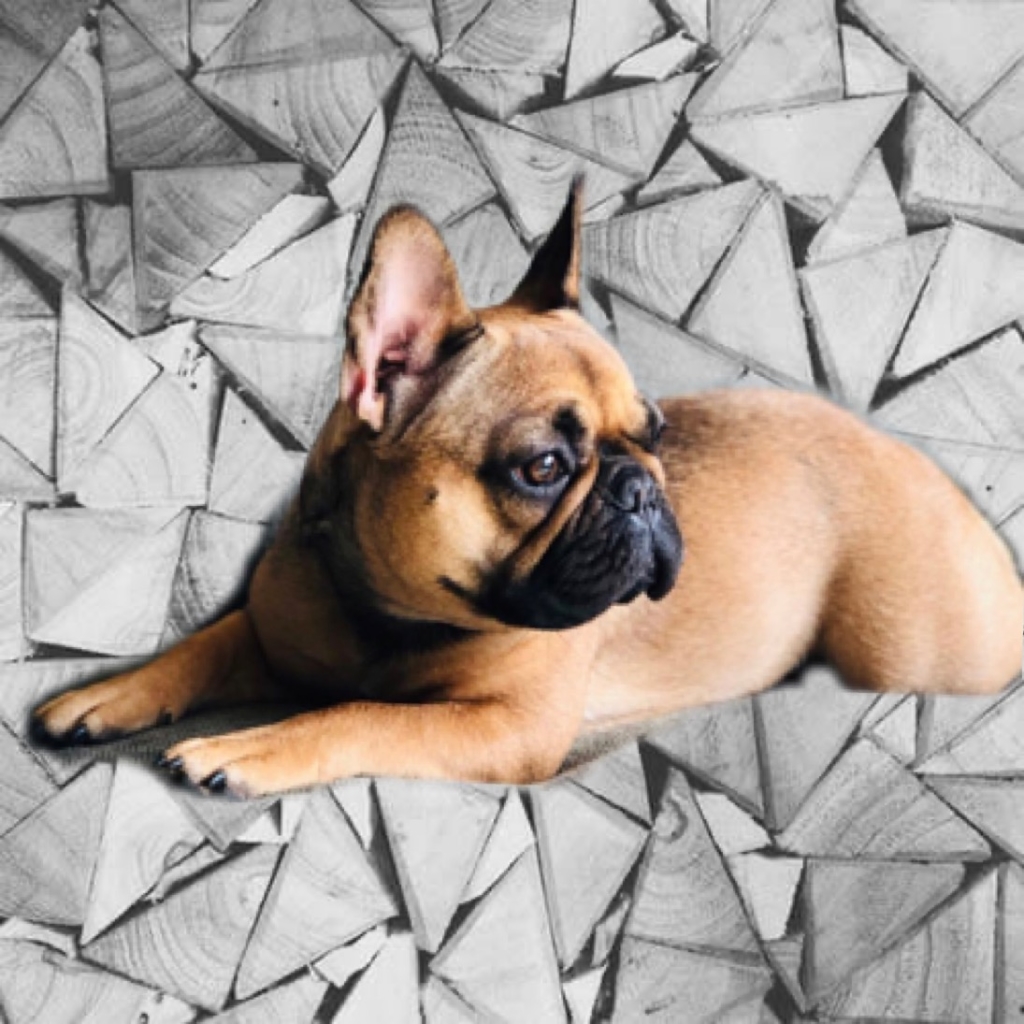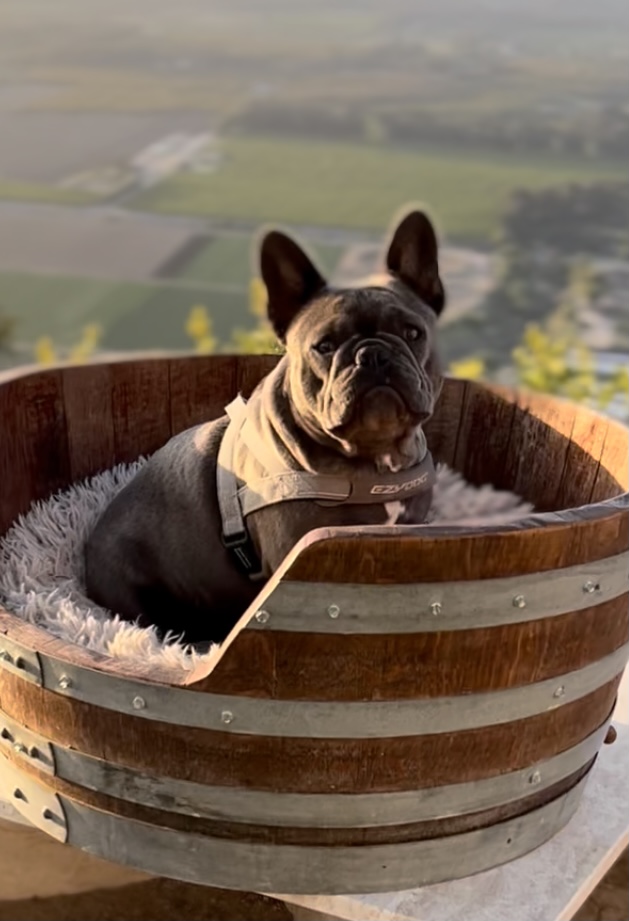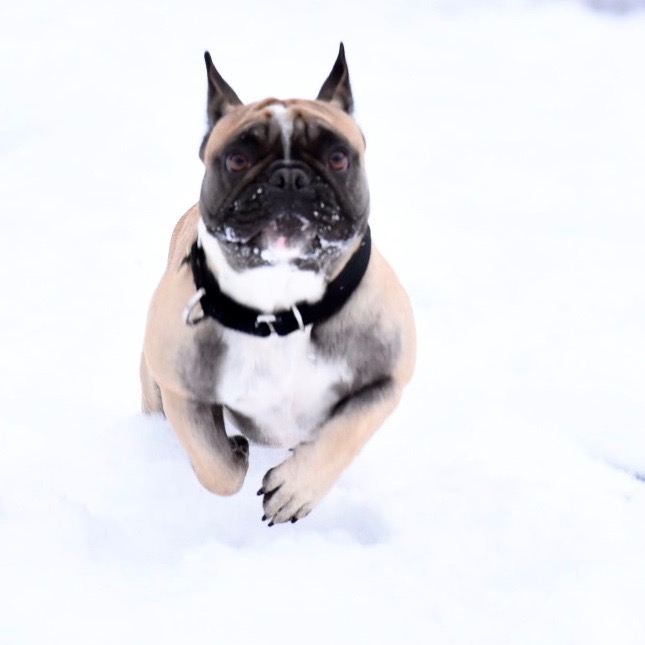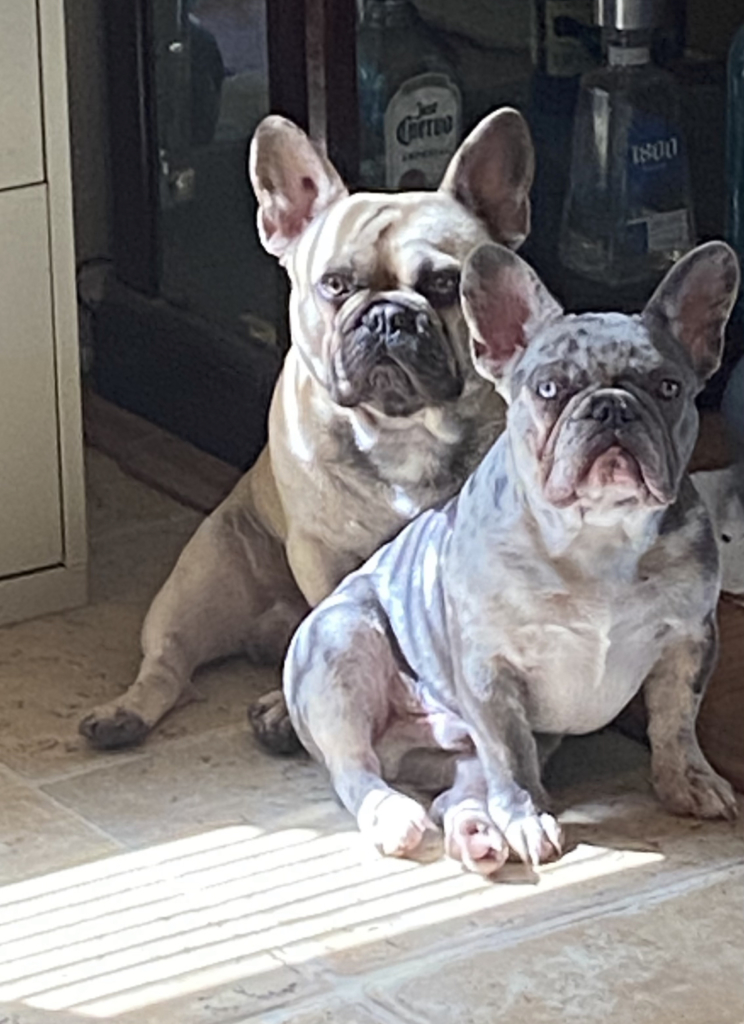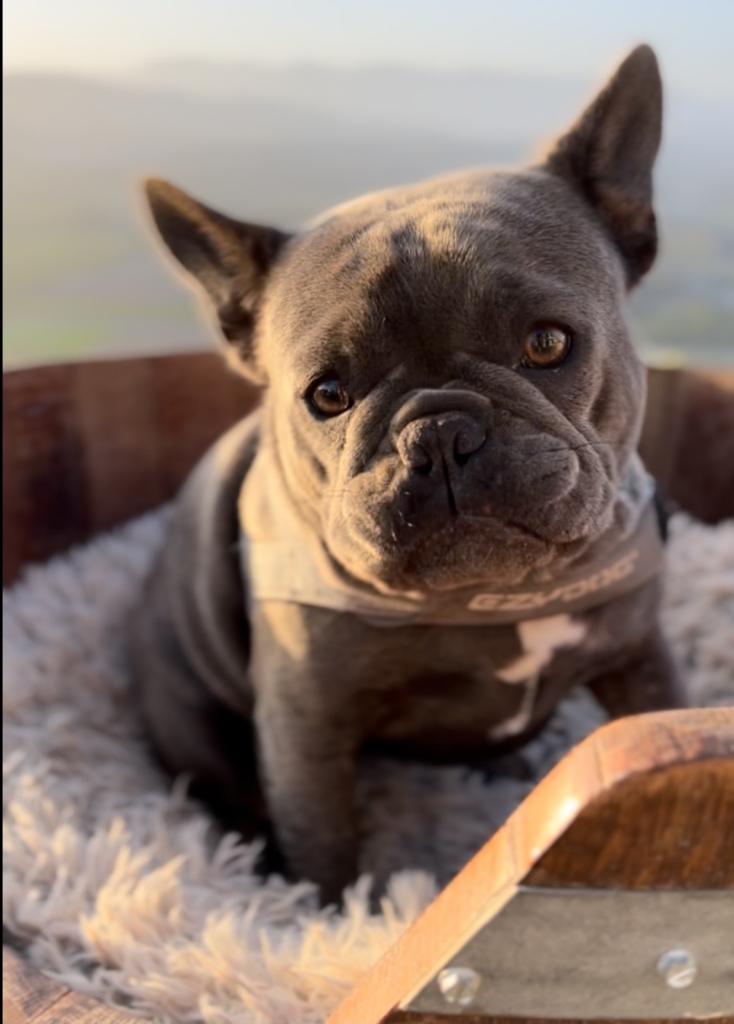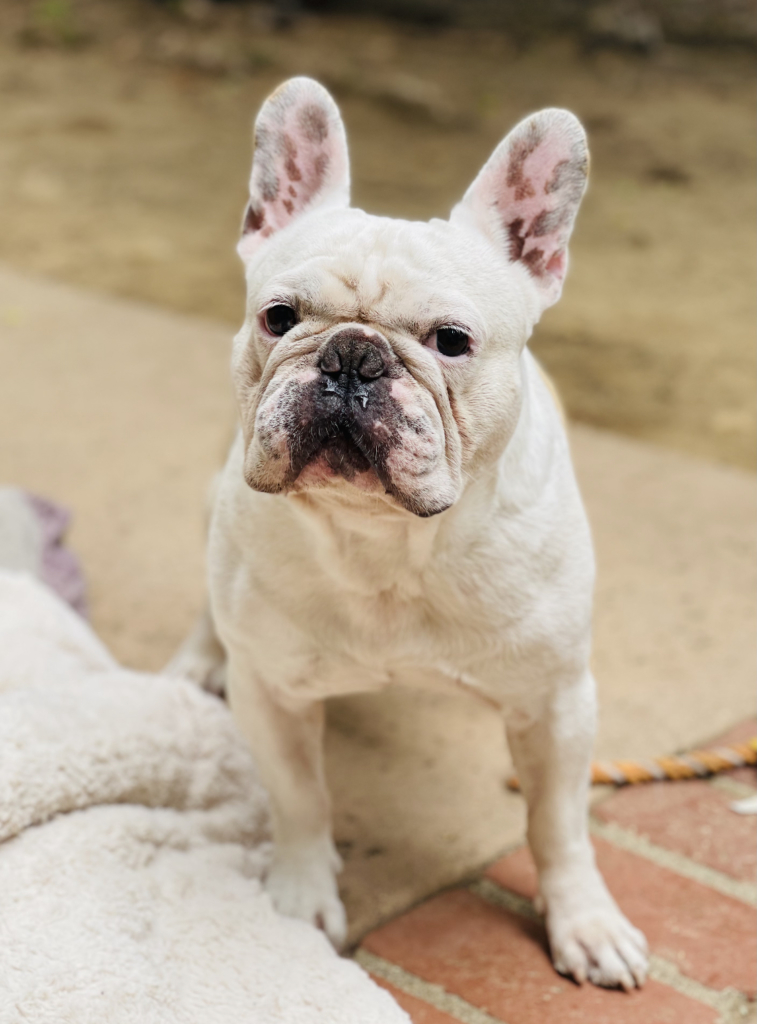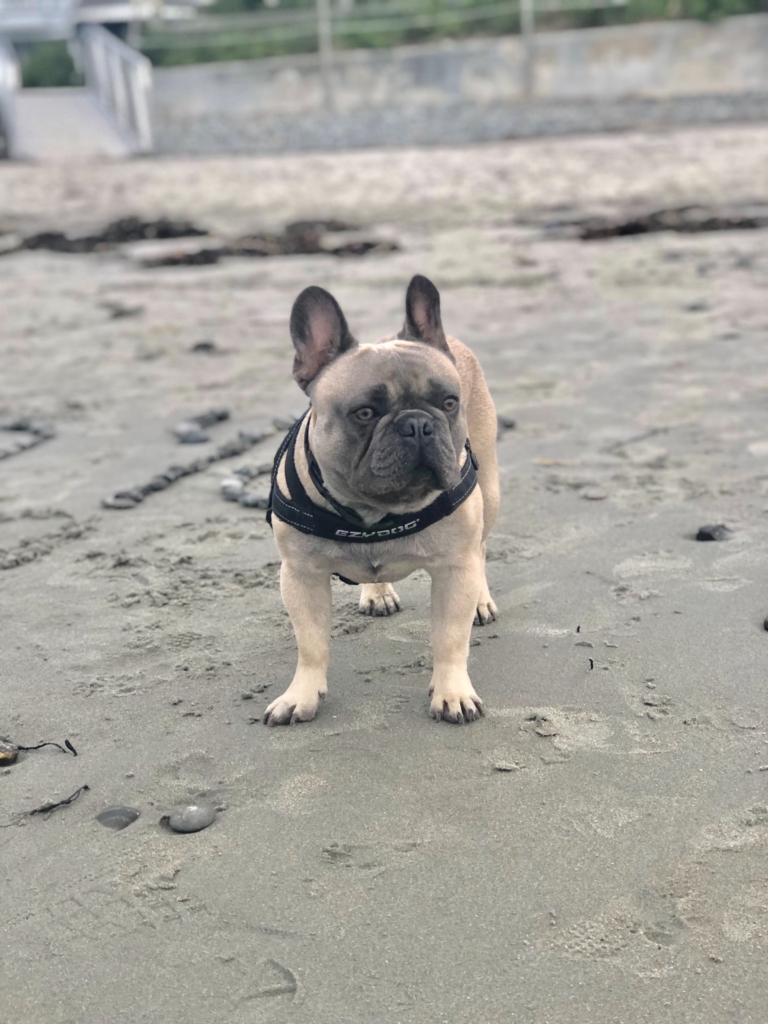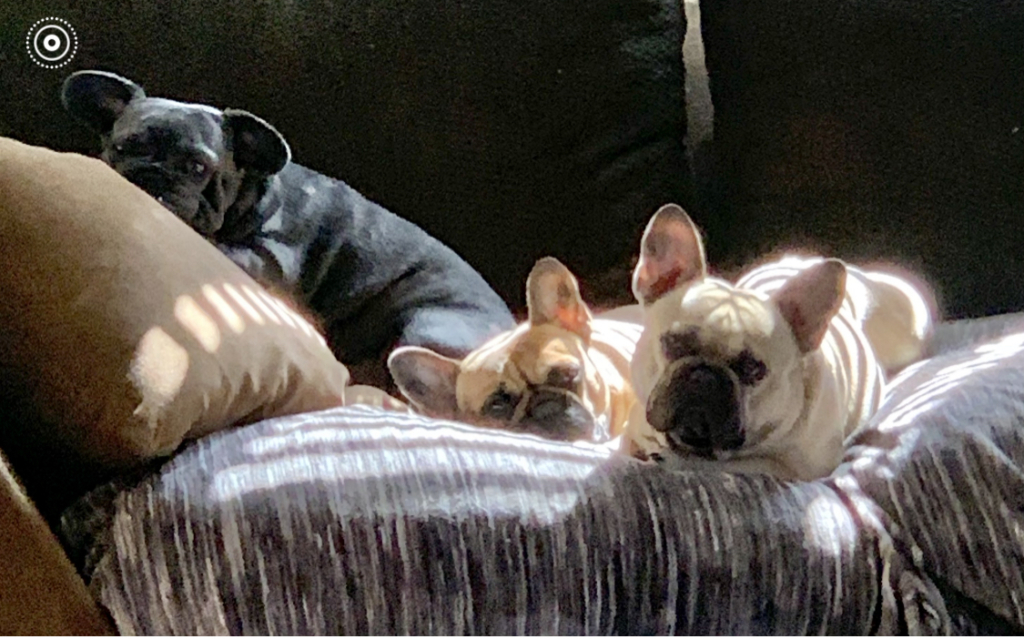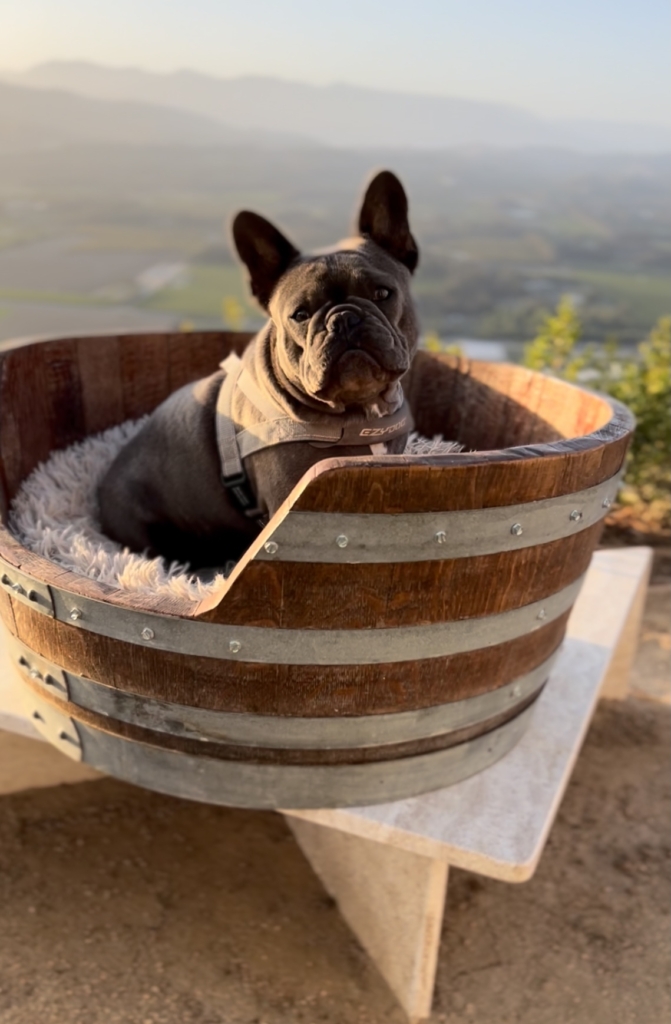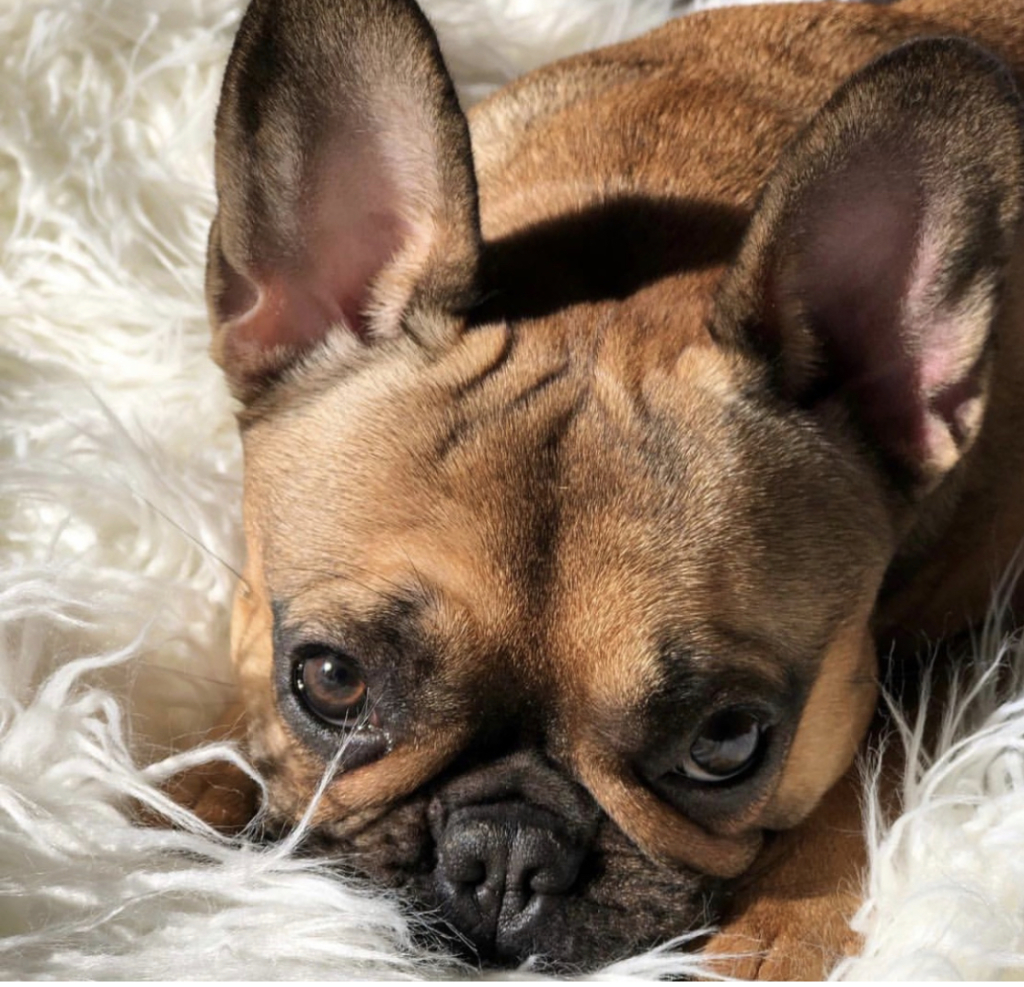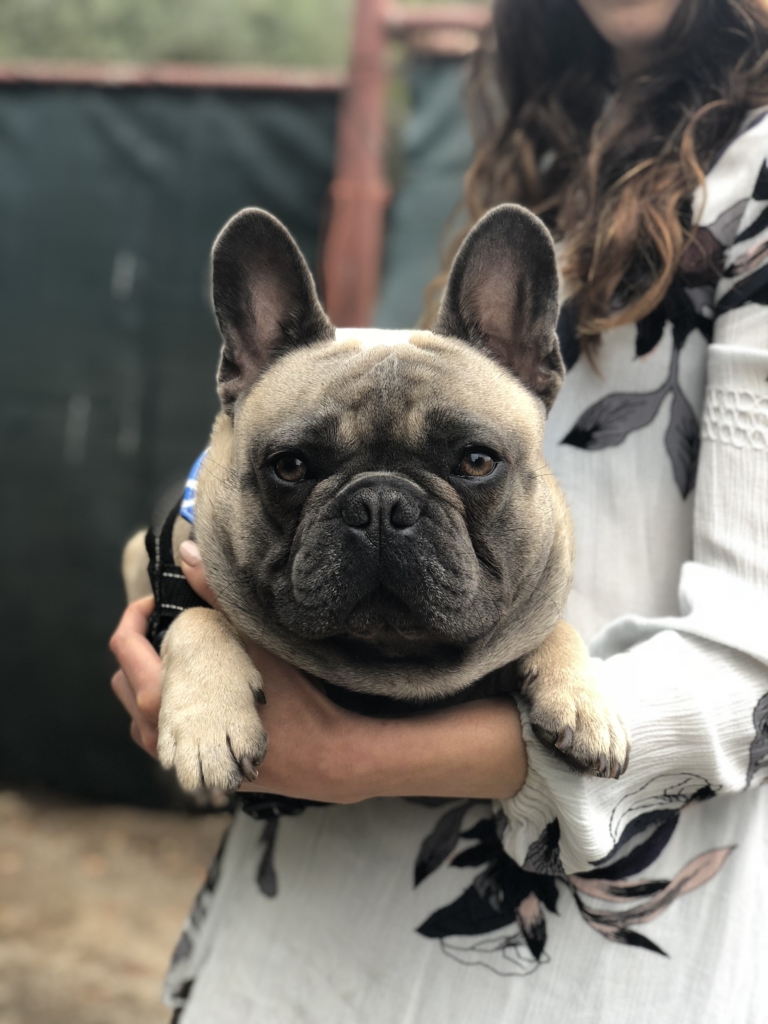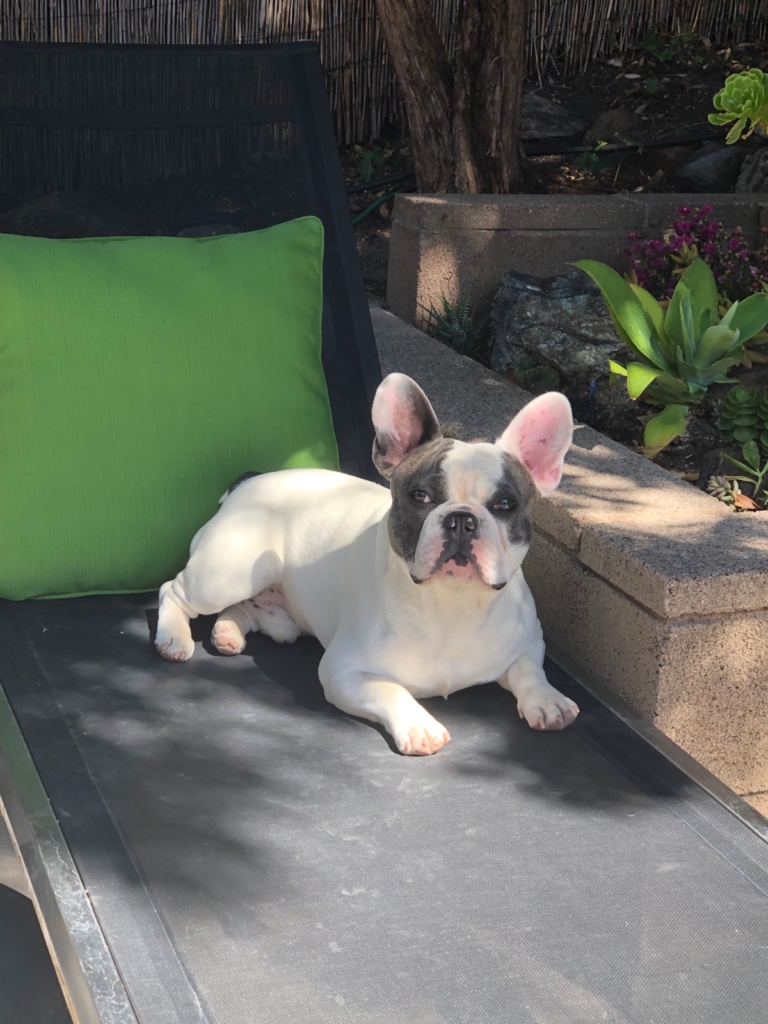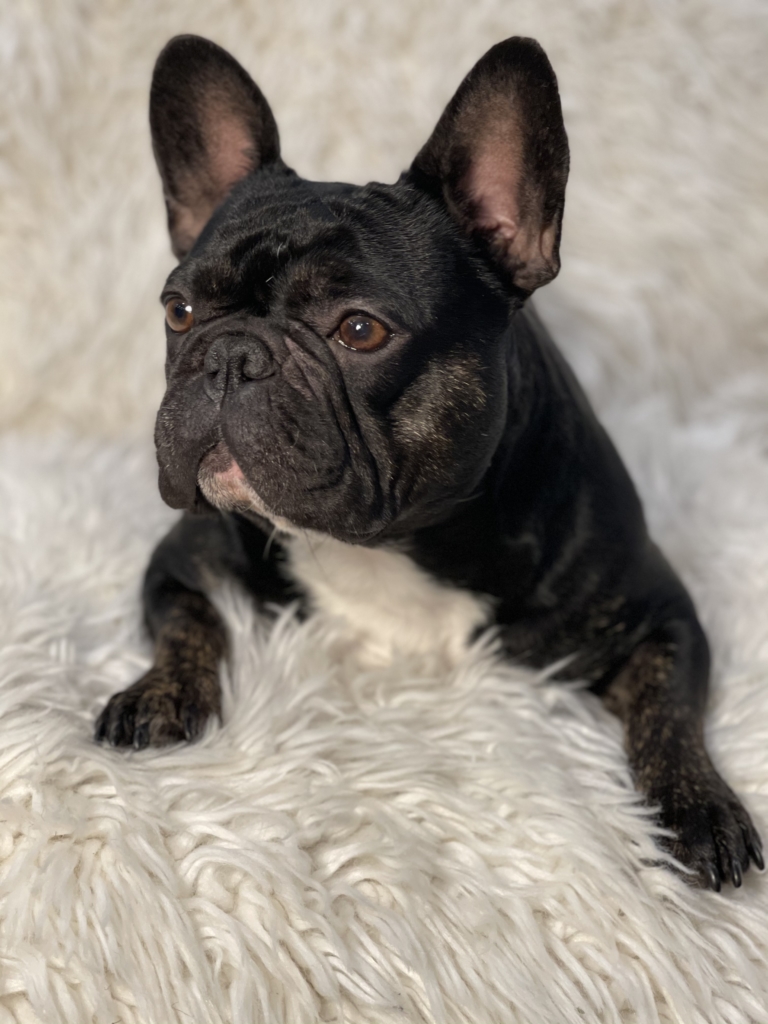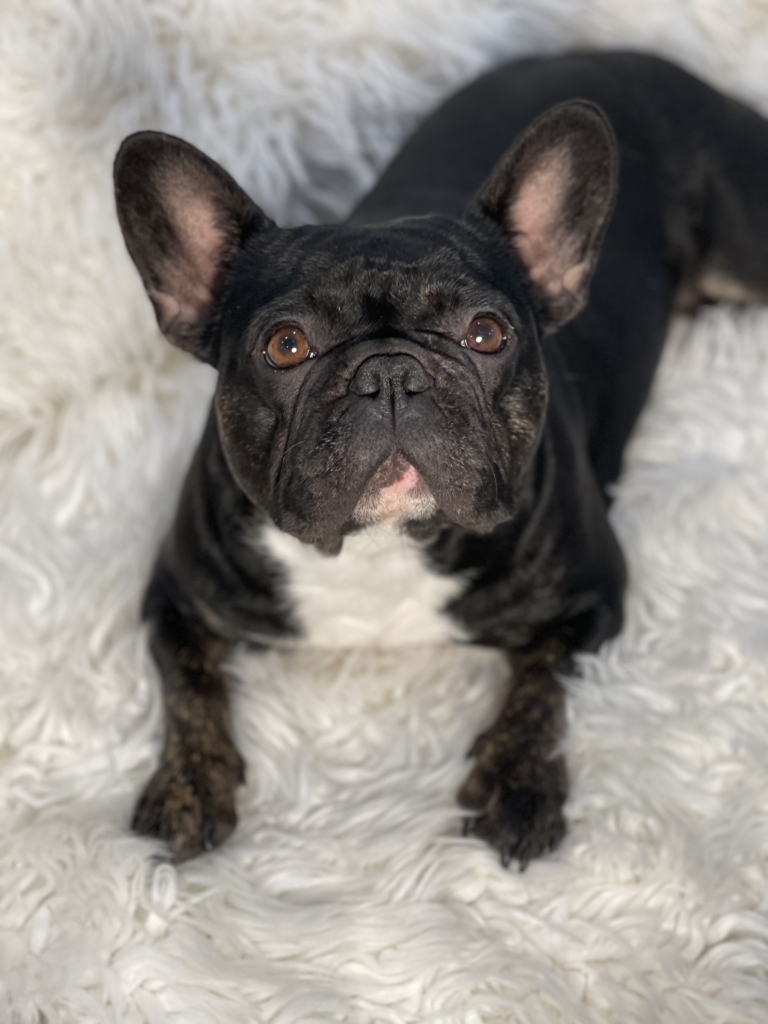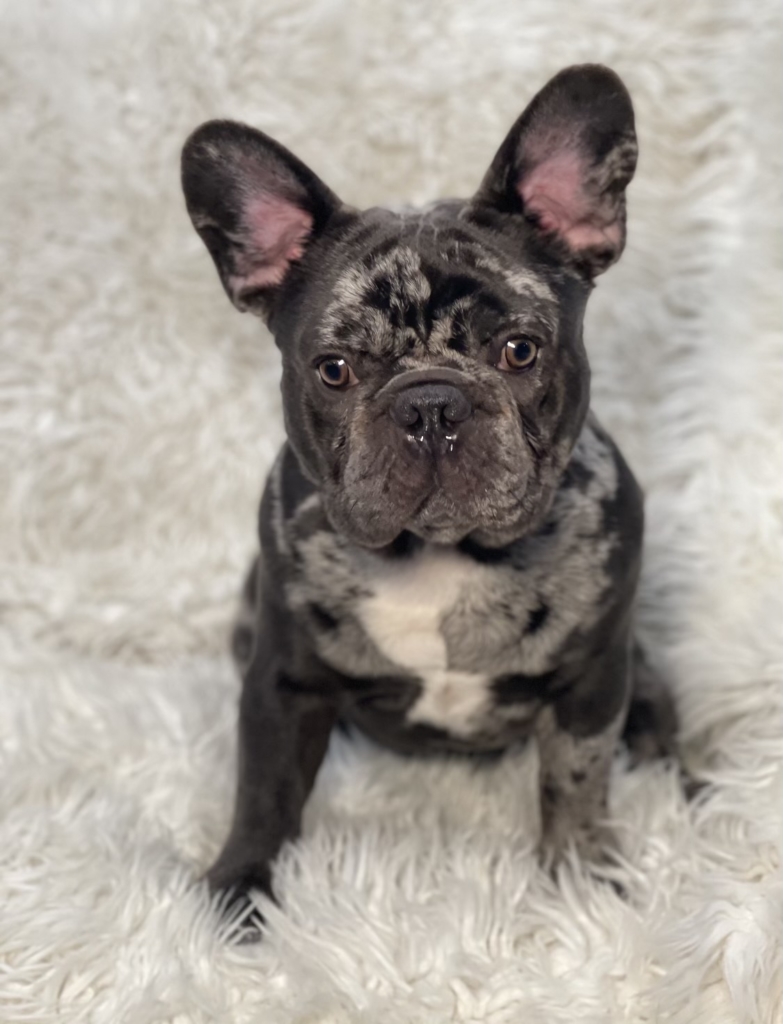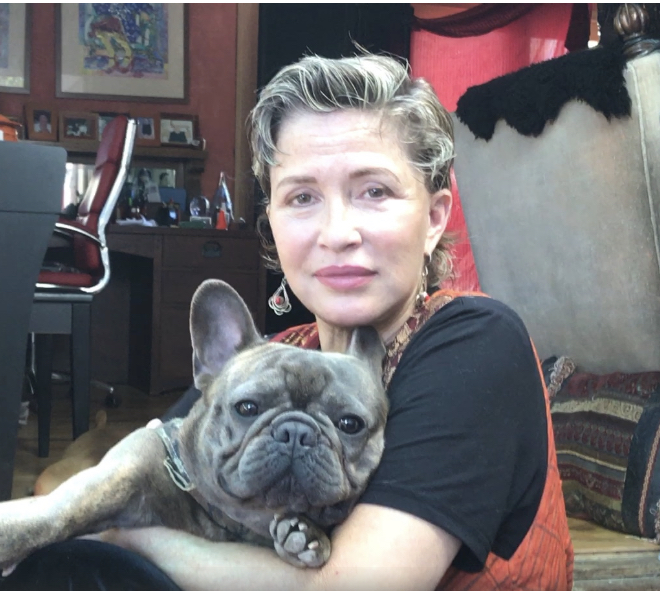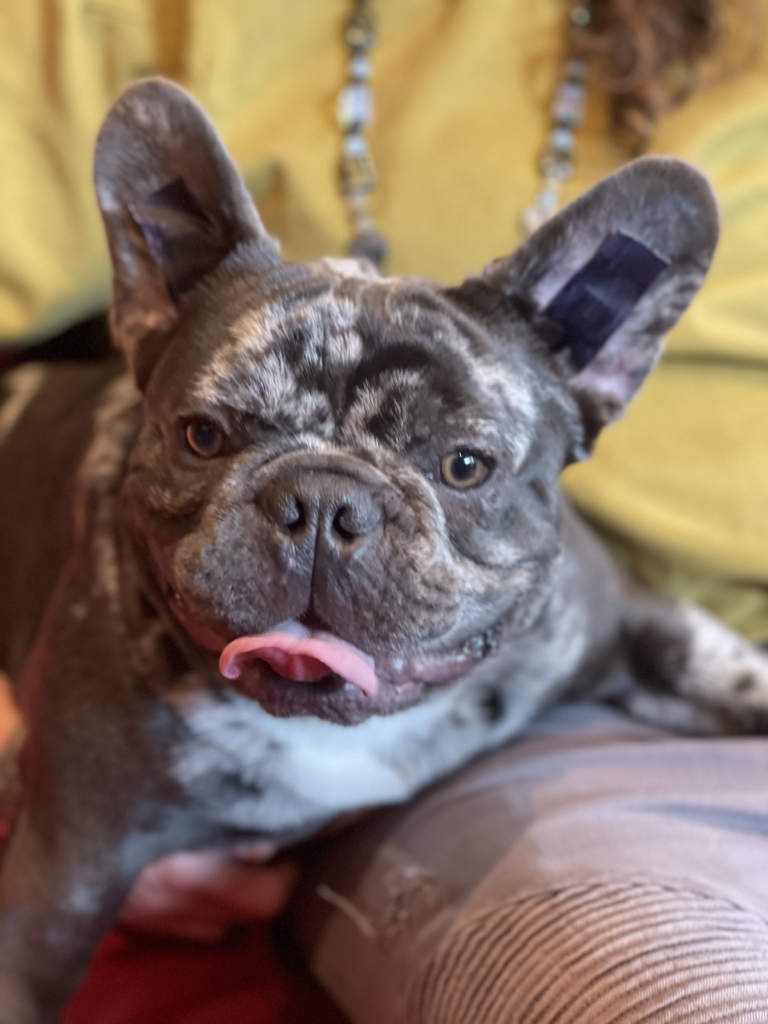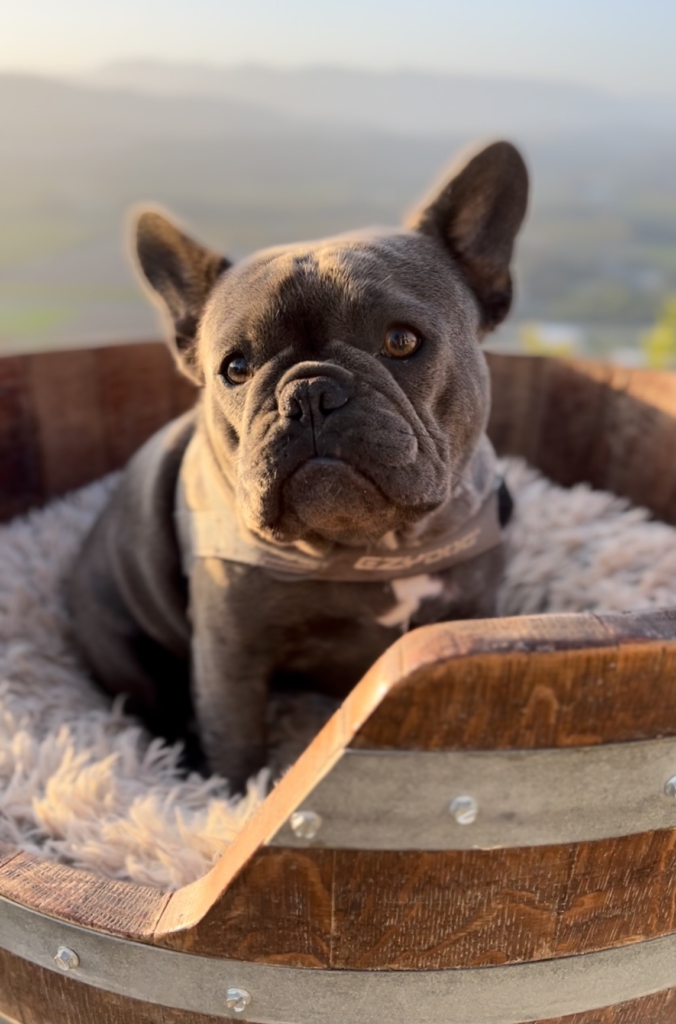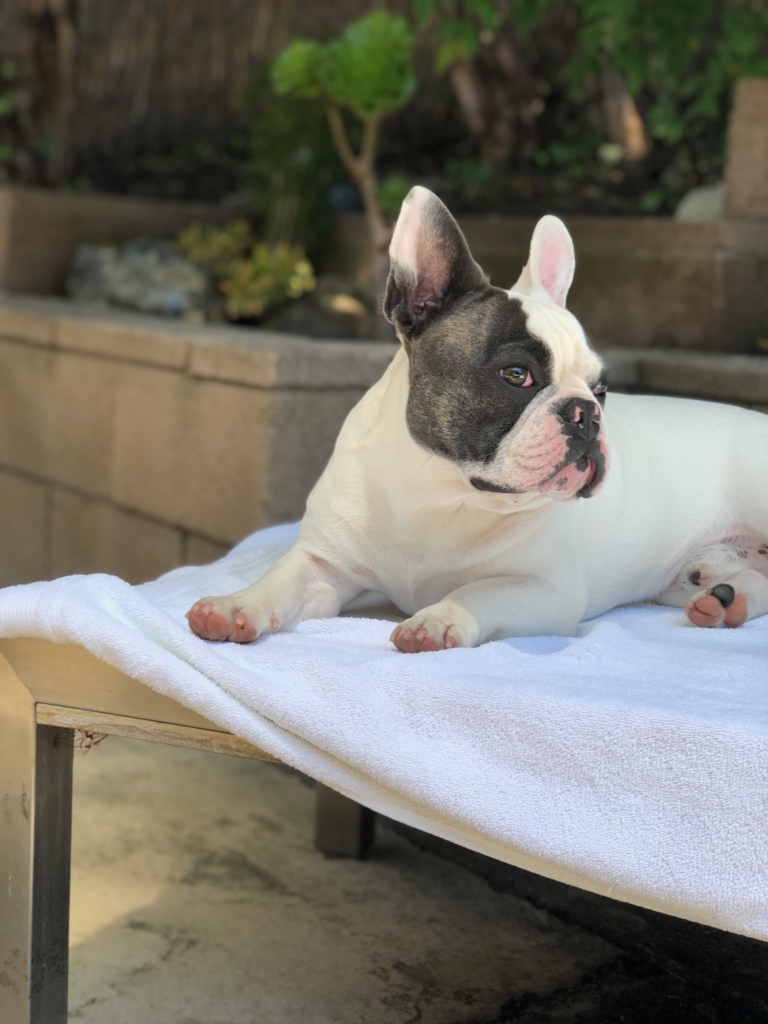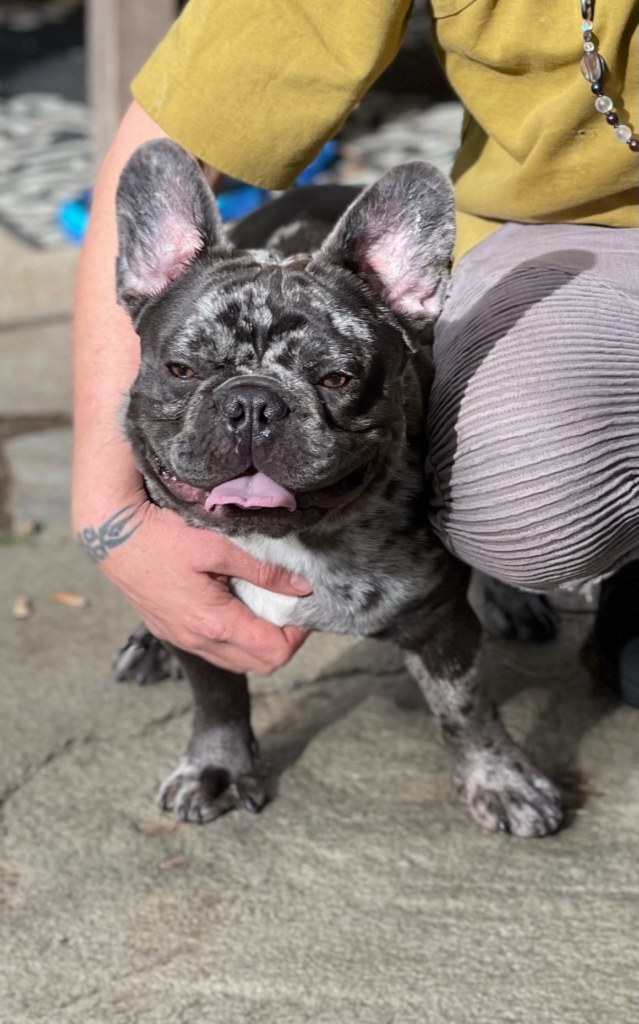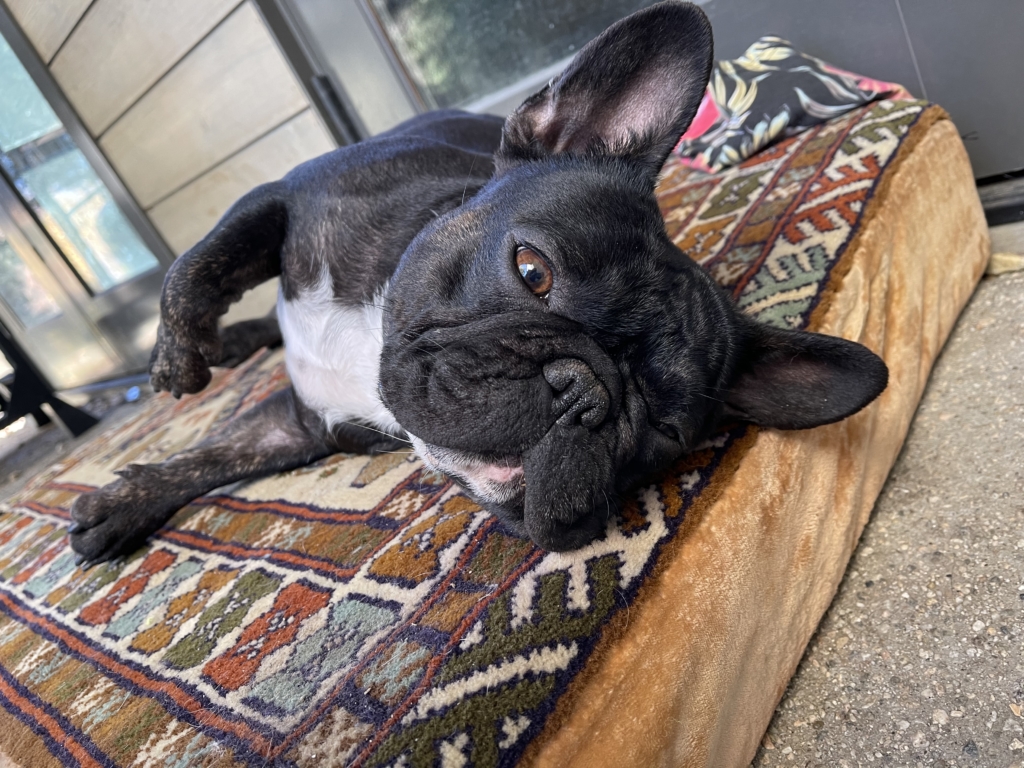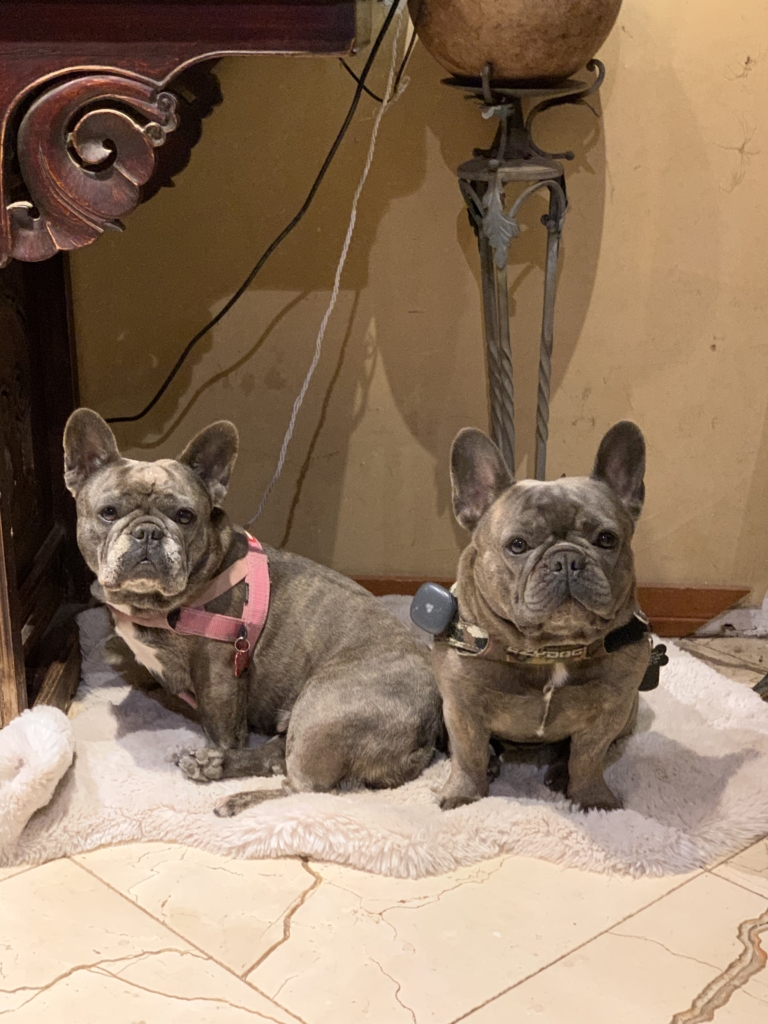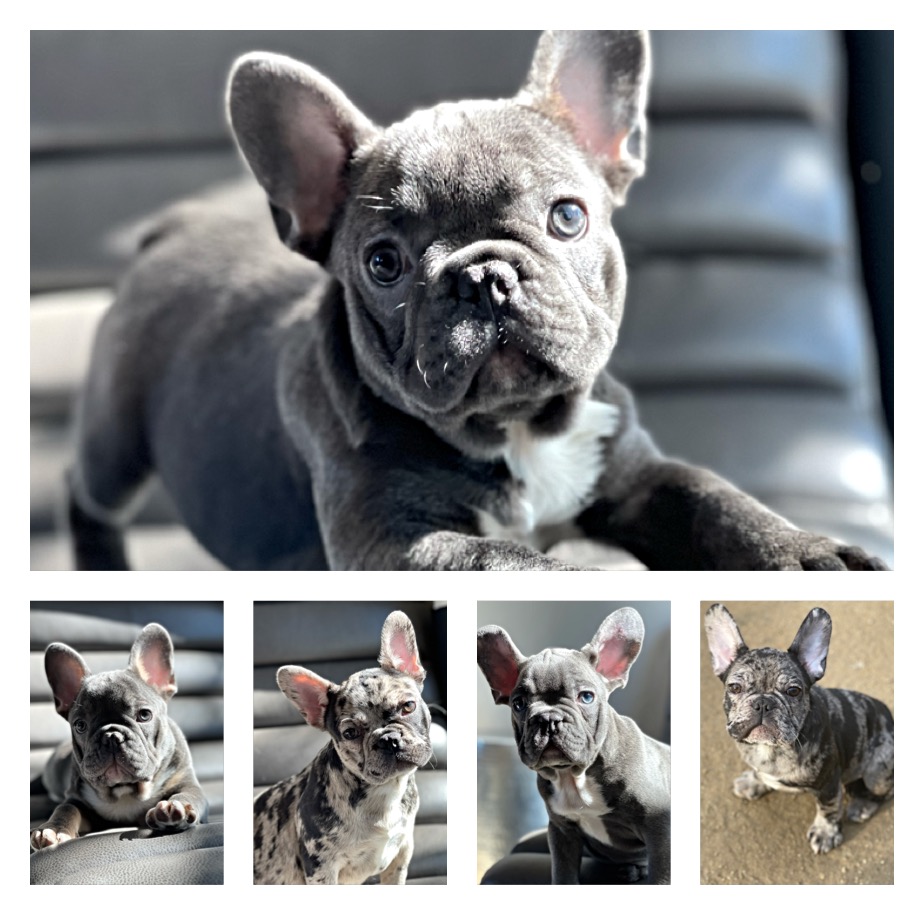


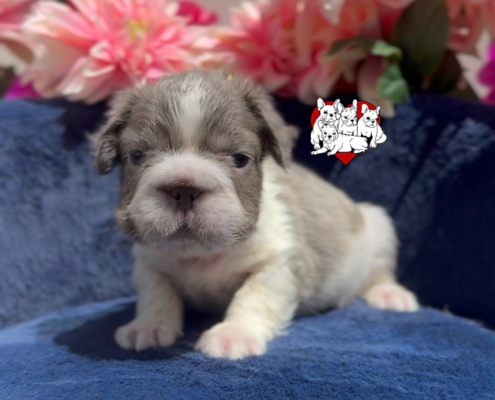
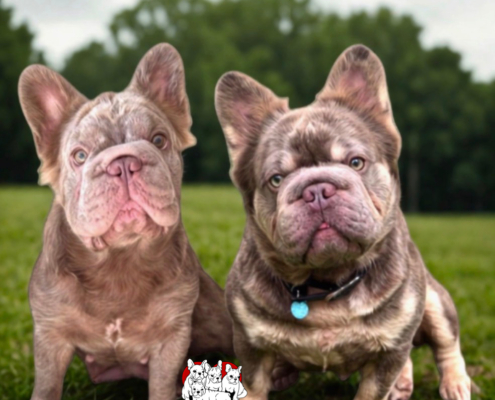
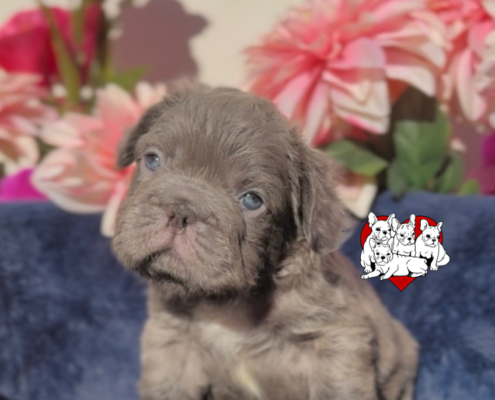
SMALL Blue French Bulldog Female YOSHI and brother BUDDHA are EXAMPLES of our PUPS!

SEE HOME PAGE for CURRENT or AVAILABLE PUPS PAGE

LEARN OUR PRICES

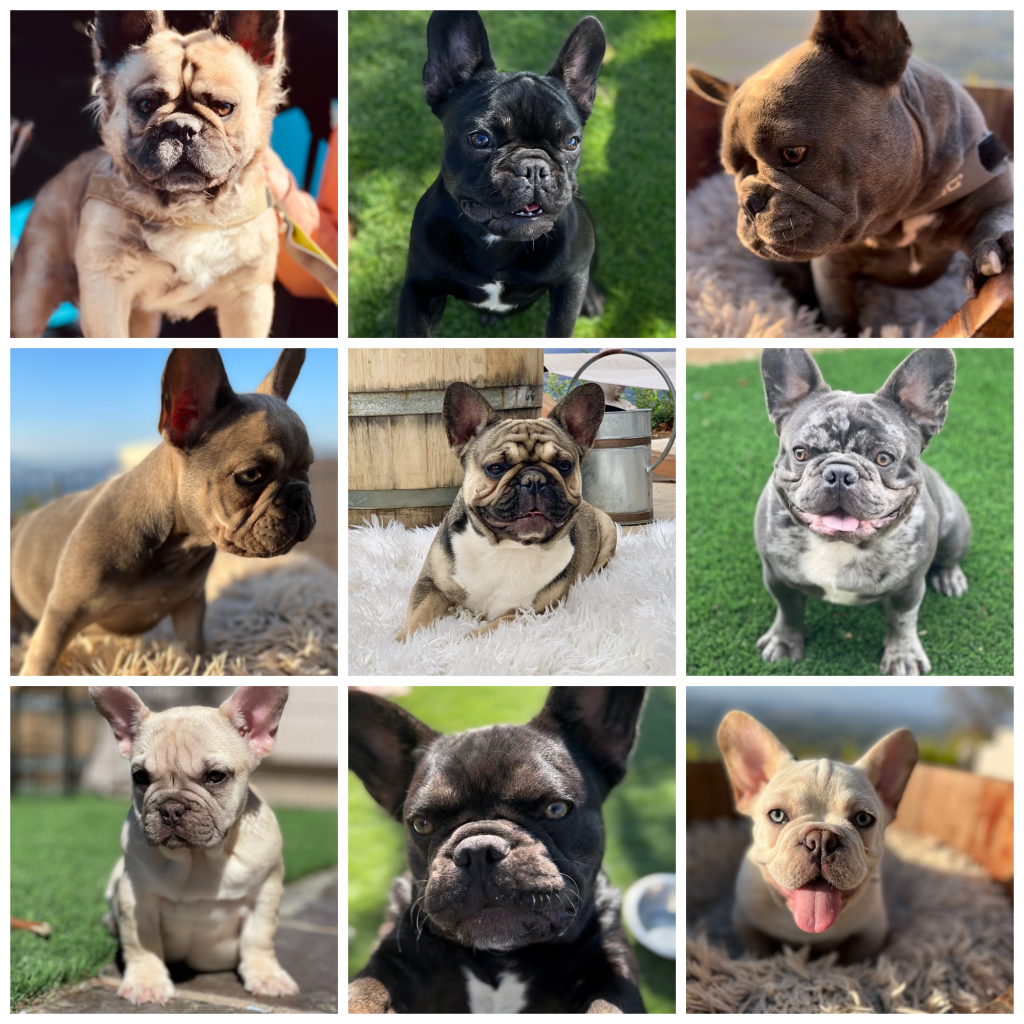
EXAMPLES of our Blue and Blue Fawn French Bulldog Puppies

Click on IMAGE and use ARROWS

Some Blue French Bulldog puppies retain their blue coloring as they mature.
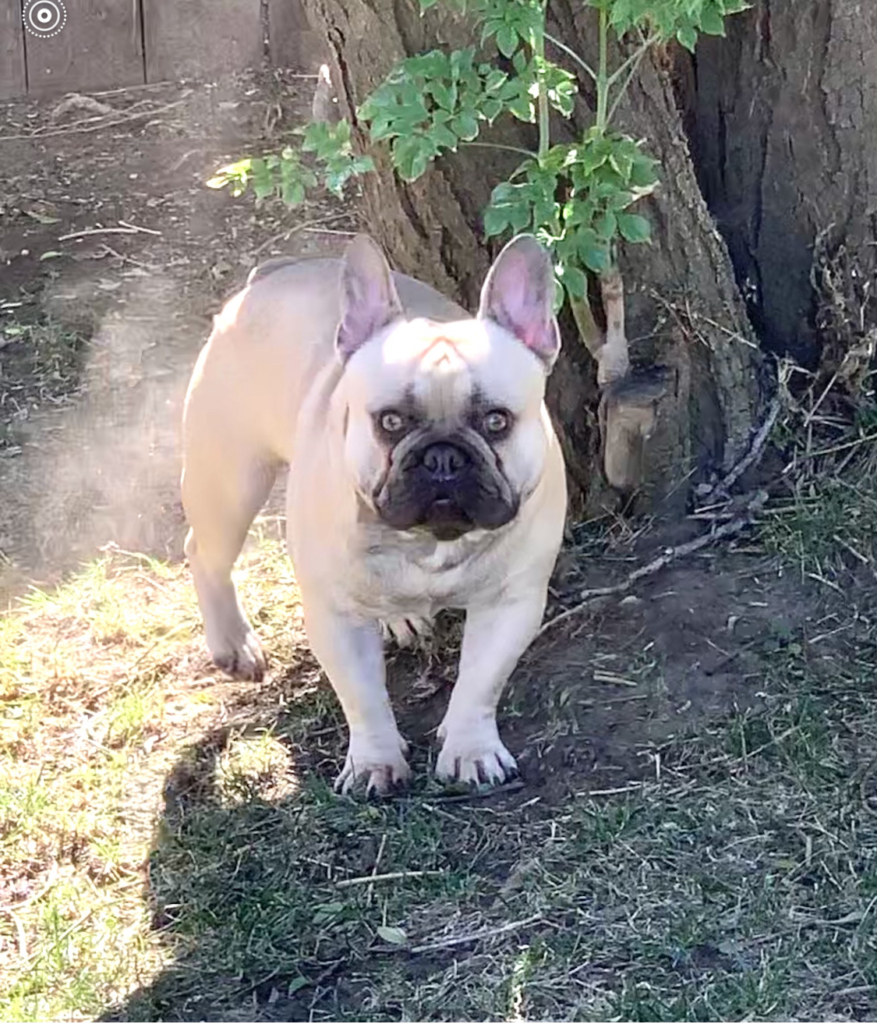
At times, we have Blue French Bulldog puppies whose coat color remains blue as they grow. While this shade can occur naturally in the breed, many puppies that appear grey or bluish at birth later develop traditional colors such as fawn or brindle.
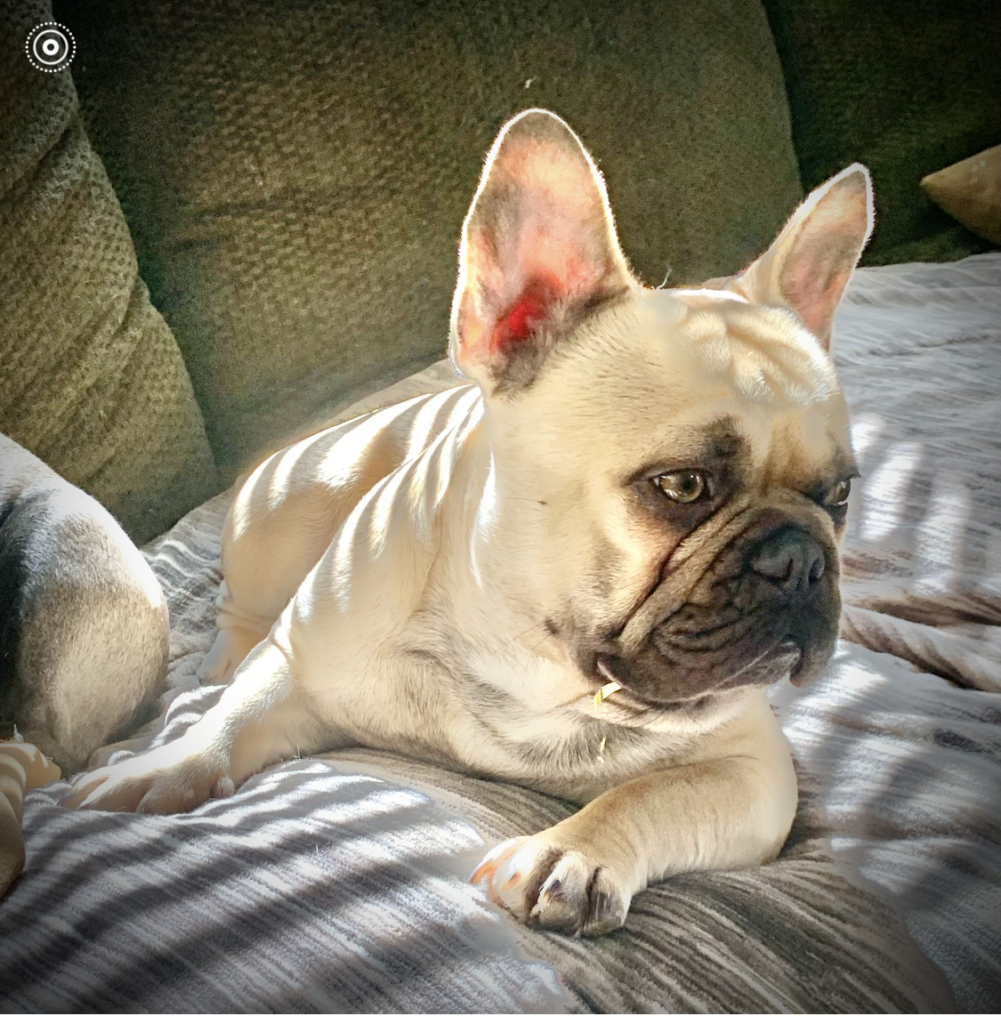
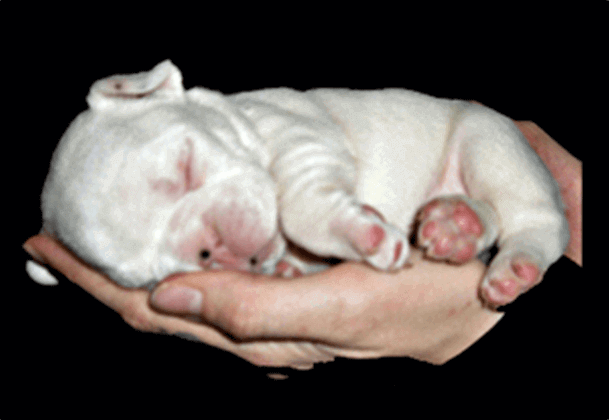
For years, some puppies were born looking “grey,” only to change color within a few weeks. This happens because the blue shade comes from a recessive gene, similar to how red hair appears in humans. When both parents carry this gene, a puppy may inherit the blue coloring.

What is line breeding?

In the past, breeders sometimes used close genetic pairings to increase the chances of producing rare traits. This approach, often referred to as
“line breeding“, involved breeding related dogs to strengthen recessive genes.

While this method can bring out certain physical traits, it may also increase the risk of passing along hidden health issues. Recessive genes can affect more than just coat color, and some problems may not appear until later in a dog’s life.

A safer and more responsible approach is to pair two unrelated dogs that both carry the same recessive gene. This allows breeders to encourage specific traits without increasing the risks associated with close genetic relationships.

Many miniature and specialty breeds developed this way over time. Early bloodlines were often less stable, but with careful selection and patience, healthier lines emerged.

Take Yorkshire Terriers for example… It took years of thoughtful breeding to strengthen the breed’s overall health. Today, they are known for their resilience and consistent temperament.

And so it is with the breeding of Blue French Bulldog puppies here at FrenchBullDogsLA.


    FrenchBulldogsLA.com
    Dr. Marika Zoll

    3632 Thacher Road
    Ojai, CA, 93023

    805-876-5000
    cell: 310-666-7840

    Understanding the Genetics Behind the Blue French Bulldog Color

    Blue French Bulldogs Can be HEALTHY and UNRELATED

    The appeal of blue French Bulldog puppies lies in their striking coat color, but it’s important to understand how such unique traits come about. Historically, the blue coat—while undeniably beautiful—was often achieved through practices like breeding dogs within the same bloodline. This method, known in breeding circles as “line breeding” or in some cases “inbreeding,” involves pairing related dogs to amplify specific genetic traits.

    Recessive genes play a significant role in producing traits like a blue coat. These genes, which are typically less dominant, require the right conditions to be expressed. For instance, just as blond hair appears more rarely in human populations compared to dark hair, the blue coloration in French Bulldogs requires careful genetic alignment. To bring out such a recessive trait, breeders may pair dogs that carry the same recessive gene, often found within related animals.

    This process works because offspring inherit genes from both parents. For a recessive trait, like the blue coat in French Bulldogs, to manifest, both parents must contribute the recessive gene. This is why line breeding can ensure the blue coat appears with greater consistency, though it raises concerns about genetic diversity.

    When searching for blue French Bulldogs for sale in California or elsewhere, it’s vital to consider how these puppies were bred. Ethical breeding practices prioritize the health and well-being of the dogs, ensuring that their stunning blue coats are not achieved at the expense of their genetic health.

    The World’s Largest Dog Shows

    Over 173 breeds compete at the worlds largest show for dogs in the world West Minister kennel club dog show. When all these dogs are seen together in a hotel lobby before the show it’s a dizzying array of different sized bodies, the length of the noses the ways they bark and these are the differences that make the dog lovers such obstinant partisans.

    Uniqueness seems to be a striving goal . Most of the Breed’s have been created by men themselves by bringing together traits from different dogs and combining their favorites and accentuating those things by breeding offspring with others that have the closest desired attributes. Consider the work behind creating a dog that might be well suited for cornering badgers.

    It’s believed that hunters in Germany in the 18th and 19th century brought together some different combinations of hounds such as a Bassett hound that was a native of France being a possible likely suspect together with some sort of a terrier eventually producing a new variation on the Bassett hound with stubby legs and a  round body that made it possible for it to chase its prey into the mouth of a burrow.  

    This today is called the dachsund or in German  “a badger dog”. Since the evolution of the Dachsund in more recent years breeders decided they wanted a smaller variation on this dog and then eventually by breeding together smaller varieties of the badger dog a miniature dachsund had now been established. You can find a similar history on many of the breeds that are now taken so for granted As being just a breed with no question about how it came into being

    This is all common knowledge amongst breeders but not talked about with the general public as a whole. And unfortunately there isn’t some sort of quality control  for Breeders that prohibits breeders from doing experiments.

    How To Exacerbate a Trait

    Many learned early on with many examples that combining genes of related dogs can exacerbate a trait encouraging the outcome desired . It is with this knowledge in mind that dog breeders can have some control over the babies that are born.

    • However the notion is most often with the way the dog looks in mind.
    • Unfortunately health characteristics are often ignored or looked at later rather than sooner.
    • In general people respond to what they can see.
    • Beautiful traits are seen.
    • A brain too large for a dogs skull is most likely not seen and therefore ignored.

    What sits in the face of the breeder is most often times A puppy that has a preferred look about it. It may be small or it may be tall it may have a special kind of hair.  

    We will talk more later about stabilizing the traits.

    Nature Traits

    The nature of the animal can also easily be considered since it can be seen. This observation lends itself to some deliberate bad breeding of fighting dogs. In the world of fighting dogs aggressive dogs are bred together with other aggressive dogs certainly ensuring aggressive dogs that will be more inclined to fight.

    This Brings To Mind the “Fox Story” about Blue Frenchies

    This reminds me of the story about the foxes. There was a question asked once…

    Do domestic dogs really come from Wolves?  

    Some people say “for certain” and other people say “absolutely not!”

    So science stepped in and retrieved foxes from the wild. They were all solid black foxes and they started breeding together the like minded animals meaning the gentle foxes to other gentle foxes and the more aggressive ones to other aggressive ones. This continued for five years long.

    A very interesting outcome happened!

    Let’s first take a look at the foxes that were aggressive and what those puppies grew into when being bread together over and over and over again aggressive pups to aggressive pups the outcome was an extremely aggressive fox that clung to the side of its cage like a rabid animal and still a solid black fox.

    However things were very different with the gentle natured foxes that were brought together over and over again for five years.

    Not only were these foxes as domesticated as a household dog with absolutely no tendency of shyness or fear just completely normal like a social domesticated dog BUT additionally a fascinating fact was that they were no longer black. They were all different shades of colors of the rainbow across all the different dog breeds.

    There were white ones and tan ones and brown ones and white ones with black spots and white ones with brown spots and dogs with spotted gray markings like blue. Merle’s every combination you can imagine resulted from breeding gentle natured foxes together for five years continuously.

    French Bulldogs Genes That Are Connected

    What this has taught us is that  what you breed together  will give a certain nature outcome in addition to color traits, that the nature trait is somehow actually connected to the color trait. That’s as far as the guesswork goes.

    There is still no scientific conclusion as to why that is.

    If this were the case with human genome’s then you could explain all of the bad blonde jokes but we know of course this not to be true with humans. It seems that the genetic structuring of dogs is in fact very different from humans and therefore still loaded with questions.

    Red, White and Blue French Bulldogs (for Sale)

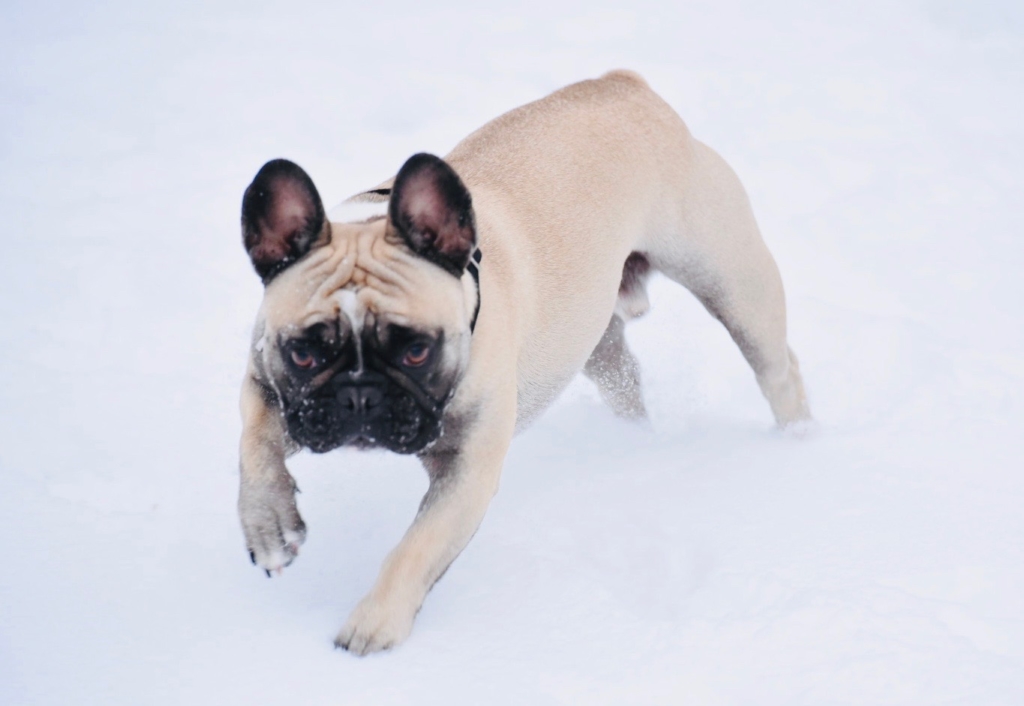
    We sell almost every frenchie color. Red French Bulldogs or white French bulldogs or blue French bulldogs they all have one very significant thing in common.

    They are the results of an abundance of recessive genes that hold those colors to trump the dominant genes and give birth to a puppy of that lesser common color.

    Let’s clarify what exactly the differences between dominant or recessive genes are…

    Back to Basics: Dominant and Recessive Genes

    You may have to go back to grade school to dig up these old memories but in fact it begins with that we all have two copies of each gene that we inherited from our mothers and our fathers.

    And each copy of those jeans can be different.

    This means that one of those copies might give you blue eyes while another one of those copies might give you brown eyes.

    So what would the color of your eyes be if you have both the blue eye and the brown eye version of the eye color Gene? Well that would be Brown…

    It is from this that comes the idea of dominant and recessive.

    Dominant then means that one of the versions supersedes the other version. In our example here in the sketch on this page the brown is dominant above the blue so then you will end up with brown eyes.

    The illustration demonstrates the way that we write out recessive and dominant traits on paper with the dominant one represented as a capital letter and the recessive one represented by a lowercase letter so in this discussion about eye color the Blueeyes is represented by a Lower case “b” and the brown eyes is represented by An upper case “B”.

    Dominant and Recessive Genes team up

    So as I stated above humans have two variations of every gene so you can be BB, Bb, or bb–BB and Bb and have dark brown eyes or be a bb and have blue eyes.

    Now let’s substitute the capital B and the small b in our  example with dogs and genetics and say that we’re talking about a dark colored dog or a lighter color dog and in the case of blue French bulldog puppies the darker color dog is a black or brown brindle which is the dominant gene but we also have in the bloodline the lighter color.

    We can get real deep and serious about this and tell you later about how the lighter color is actually a dilution of the darker color which also holds to be true with blue eyes which are actually a lacking of pigment but that’s all much more confusing and we want to keep it simple here.

    I’m trying to help you understand how genes are duplicated and in breeding whether it be dogs or humans the more dominant genes you have the more likely that your dogs will be dark colored.

    Until recently the main way that these light colored dogs were  showing up was by encouraging more of the recessive genes by breeding the children back to their parents.

    • In this way you can double up on the recessive genes.
    • This is called in line breeding or abbreviated it’s called inbreeding.
    • The serious problem with this technique though is that we are encouraging other recessive genes as well as ones that we are not discussing or looking  closely at although ones that could be health issues or risks.
    • We may not know what they are upfront in our face but later on after dogs mature health issues can be observed.

    It is for this reason that I have never for the last 10 years participated in deliberate breeding of blue French bulldog puppies!

    I was always terrified that if I just got one from anywhere it could be a result of inbreeding and I would end up with the dog that was unhealthy.

    European Bloodlines produce strong Blue French Bulldog puppies

    It’s for this reason that I chose to be patient and when I knew that a breeder in Russia from whom, I had bought my initial breeding females that she was having some blue French bulldog puppies.

    I learned that her blue puppies were a result of breeding together unrelated dogs.

    The typical result would be one single puppy in a litter of perhaps six. It wasn’t uncommon for one gray puppy to be born but for it to remain gray that was another story.

    So I saw her first blue puppy about five years ago that stayed gray and was an incredibly beautiful dog.

    She continued to breed together these unrelated dogs and for a long time didn’t have any more gray puppies and then when she finally did again I was first in line for that puppy.

    I feel confident after a 10 year relationship with this breeder that her practices are ethical and that she’s being honest with me and I have seen many many of her dogs mature and live long healthy lives a few of them as old as 18 before passing away.

    It is after this long wait and observation that I finally received Logan – he is my stud dog who is what we call a reverse brindle on paper but in fact he is a gray dog with lots of fawn striping through his coat and striping is referred to as brindling.

    You can see here by these pictures just how extraordinary he is.

    • He is now two years old and has in fact not yet been to the vet other than for his well puppy check.
    • His parents are healthy dogs, his father is a beautiful blue French bulldog and his mother is a fawn.
    • I feel confident that he is a healthy specimen of the breed and that he is not a result of inbreeding.

    Breeding together non related dogs

    I am now making the same effort and continuing this practice of breeding together non related dogs with this special blue/ gray color pups. These Blue French bulldog puppies that come from him are always a result of breeding together non related dogs.

    In many cases the female is also a fawn with parents of varying colors including one blue gray parent that we referred to as a blue French bulldog.

    A Short Study on White Genes – and its relation to the Blue French Bulldog Puppies for Sale

    In the interest of dominant and recessive genes this seems the right page to for a moment tell the story that I learned the hard way about White Dogs and all other species.

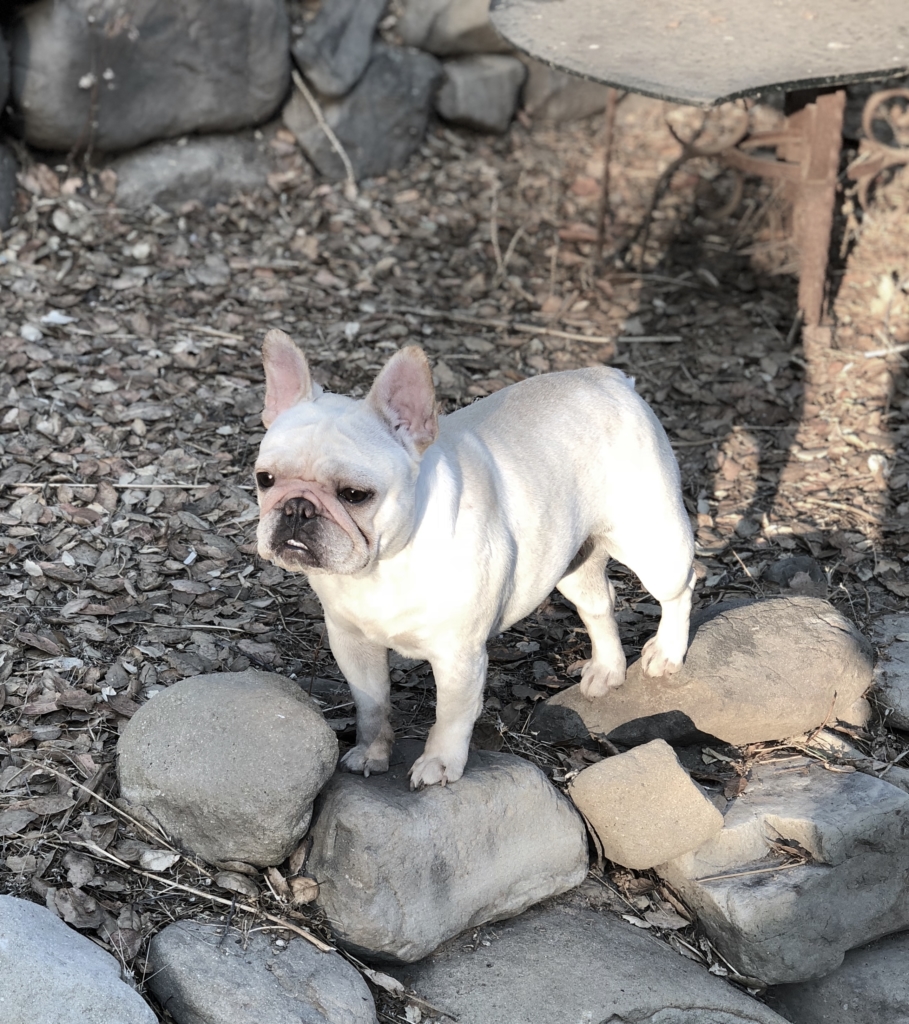
    The very first time I bred two French Bulldogs together  they were white dogs with colored spotting. We call this a piebald dog in this breed. One dog had dark brindle spots and the other dog had light cream spots sometimes called a honey Pied.

    But, nobody told me that any dog that has a white base color that the dog is actually caring the Deaf gene.

    As a result of this bad combination two dogs caring DEAF GENES my first litter of French bulldog puppies there were six and one was deaf.

    In fact we never even knew this until the puppy was six months old when I got that terrible phone call telling me that the puppy I had sold someone unknowingly was deaf.

    In the end of that story I found them a companion dog for their deaf puppy but still the fact remains that I could’ve prevented the puppy from ever being born deaf if I had not bred together two dogs that carried white as part of their color genetic make up.

    All things white carry the DEAF GENE

    It turns out that in all species whether humans, a cat or a goldfish when there is white which is a lacking of pigment for some reason still unknown to science as to why that is, the deaf gene is attached to the white gene.

    It has amazed me over the years to realize how many breeders out there are unaware of this fact. I felt embarrassed by my mistake and it was at that time that I decided to study genetics and be sure that I never made a mistake like that again.

    I took continuing education  Ph.D course classes. This also plays into my passionate opinion about breeding unrelated dogs together to accomplish a possible blue French bulldog puppy.

    Piebald puppies, which are white with dark or fawn spots, are often born. However, it’s important to avoid breeding two such parents together. If both parents are white with spots, their offspring are more likely to be deaf. This is an important consideration for future breeding.

    Why the deaf Gene is attached to the white Jean is as big a mystery as why the foxes that were breeding together with similar gentle temperaments started throwing colors.

    How can color and the nature traits be attached?

    Science doesn’t know but in fact they are.

    Here is one last startling fact about unlikely genes being connected. The blind gene attaches to blue Merle ! How do you like that? Weird huh.

    I hope this information clarifies the concerns about blue French bulldog puppies. Many of them are results of inbreeding. We’re advocating for healthier breeding practices in the present day to avoid these issues.

    Intention to breed only healthy dogs

    My goal is to engage only in healthy French bulldog breeding practices. In the future, I aim to offer more puppies to discerning customers like you. By reading this article, you show interest in this breed. Rest assured, you can enjoy purchasing a French bulldog puppy from us without worrying about health issues. You will just experience the joy of owning a unique and special pet.

    Get Your French Bulldog Puppy Delivered Right to Your Doorstep

    Finding the right French Bulldog puppy is a deeply personal decision, and distance should never stand in the way of bringing home the perfect companion. Although French Bulldogs LA is proudly rooted in Ojai and Los Angeles, we safely place our puppies with families across the United States through our trusted door-to-door delivery service. With nearly 25 years of breeding experience, we know how important peace of mind is when your new family member is traveling. That is why we work exclusively with our dedicated puppy nanny, Micki, who hand-delivers each puppy with the same love and attention they receive here at home.

    To keep everything transparent and stress-free, we offer FaceTime and video calls so you can see your puppy, ask questions, and feel confident every step of the way. With a background in animal behavioral psychology, we carefully learn each puppy’s temperament so we can match you with your ideal companion. Our nanny meets families at over 30 major international airports, including Atlanta, Dallas, Phoenix, Seattle, Chicago, and New York. Whether you’re dreaming of a Blue, Merle, Fluffy Frenchie, or traditional French Bulldog, we’re here to support you for life. Call 805-876-5000 to begin.

    Darwin’s Theory and Blue French BullDogs

    I’ve talked a little bit already about the foxes and how this proves that domestic dogs have somehow involved overtime from wild dogs, like foxes or wolves.

    But if we take a look at just dogs by themselves, here and now, domesticated dogs, how have the different breeds them selves evolved?

    If you remember Darwin’s theory and the Theory of evolution and take a look at how humankind has evolved you can see the changes in the way that we looked then and how we look now and this kind of gradation of change is also very evident in the development of many different dog breeds.

    The French bulldog has been around for a bit more than 100 years and they certainly are changing.

    The idea of what color this dog should be has also been changing and what for many years was considered a dangerous sort of game where breeders are inbreeding related dogs to produce recessive gene colors like “blue” perhaps it has now changed and stabilized overtime in much the same way that human beings now all kind of walk straight up and look more alike.

    Labradoodle is a breed now!

    I remember for years people would mention a Labre doodle and then I saw one once for the first time sitting in the front seat of a little  old VW where the dogs head practically hit the ceiling of the car sitting there almost like a human.

    It made me laugh and I asked the driver who was sitting there waiting for a parking spot what kind of dog is that and she proclaimed proudly “it’s a Labre doodle!”

    At that Time there really was no such breed it was sort of a nickname made up by dog fanciers and somewhere along the line after many many years one day we got notice that it was now officially a Breed.

    Do all labre doodles sit tall with their heads touching the ceiling like a human in the front seat?

    Absolutely not! There’s a lot of variation and I imagine that many years from now we will see less and less of this variation as the breed characteristics develop an even better stronghold and Frenchies puppies fully grow into more and more dogs looking alike.

    So let’s talk now about the French bulldog and all the variation in appearances that is least about color. There must be more than 10 different faces and I have six and none of them look alike.

    • Its nothing like a room full of doberman pinchers or golden retrievers that look like clones of one another.
    • It’s not just their faces either.
    • Their  bodies are different, some are longer and some are shorter and some have bulkier bodies and some skinnier bodies and some wider heads and others narrower heads.
    • Do they all have a super flat face? Not always, some more than others and that doesn’t mean that the one with a little bit more of a nose can breathe easier.

    This issue with their breathing would be one of those things that maybe we hope one day could be perfected. Less and less do you hear the severe sounds of what sounds like a snorkeling pig running through the house.

    I predict that one day Blue French Bulldog Puppies won’t be as sensitive to heat and they will breathe easier and snore less loudly and all of their toenails will be black and their ears will be big and bodies will always be bulky.

    Frenchie Dog Colors will vary even more in the same way as did the foxes and it won’t be considered a FAD but the norm.

    How breeds change over time.

    So how do the changes in a breed take place?

    The word metamorphosis comes to mind when I think of how puppies change from puppyhood to grown dog. Here’s a post on 6 dog breeds that have changed over time.

    It’s almost is like a caterpillar turning into a butterfly. Ha ha… well not that extreme but definitely pretty extreme.

    How can you tell when you look at a puppy what it’s going to change into?

    Imagine the patience that it’s taken for these breeders to experience their puppies being born and growing up into what they had hoped for and maybe they were and maybe they weren’t.  

    We know that initially for a breed specific trait to be developed that inbreeding is used.

    This is when related dogs are bred together and we then also risk health issues being exacerbated as much as the color that might be getting strived for.

    Overtime more and more puppies with rare colors and rare features are born and when breeds are being developed the most perfect specimen is selected and re-bread again to another dog that has similar specifications and then ideally to a dog that is not related.

    In this way overtime healthy dogs can literally be manipulated by breeding together only other healthy dogs. It has always been my biggest fear as much as I too was attracted to this color that a blue pup would come with inherent health risks.

    And, there are already health risks to be considered in this breed which is why for example I don’t breed dogs that have breathing issues or dogs that have bad nature traits like aggression because these things can all be passed onto the offspring.

    Choices that provoke a healthy dog

    Therefore over the last 15 years responsible breeders have been choosing to breed only healthy pups of this color and breeding them to other unrelated dogs of the same color and in this way we are starting to see more consistently healthy dogs of this color that are living longer lives.

    It seems more and more that indeed the color is becoming a more common and stable trait that accompanies good health. It is important that you know that the dogs you’re looking at that are this color are coming from blood lines that are unrelated so as to put at rest the fear that we’ve had for many years.

    I have no fear of this anymore and plan to only breed responsibly healthy dogs to healthy dogs and albeit they carry the same blue genes then we are thrilled to birth pups of this color and make you a proud and happy owner of a cute blue french bulldog puppy!

    Here’s a few more dog articles I wrote on Blue French Bulldog Puppies

    Feeding Your Blue French Bulldog

    Potty Training Your New French Bulldog Puppy

    Traveling with Your Blue French Bulldog Puppy

    Treating a Cold of your Blue French Bulldog Puppy

    Frequently Asked Questions About Blue French Bulldog Puppies

    What causes the blue coat color in French Bulldogs?

    The blue coat comes from a recessive dilution gene. When a puppy inherits this gene from both parents, it dilutes the standard black pigment into the distinctive bluish-grey color.

    Do blue French Bulldog puppies stay blue as they grow up?

    Not always. Some puppies that appear grey or blue at birth later develop into more traditional colors like fawn or brindle as they mature, while others retain their blue coloring.

    Is line breeding used to produce your blue French Bulldogs?

    No. We breed unrelated dogs that both carry the recessive blue gene rather than pairing related dogs, which reduces the health risks associated with close genetic pairings.

    Are blue French Bulldogs prone to health issues?

    Like all French Bulldogs, they can be prone to certain breed-specific health considerations. We prioritize health-tested, unrelated bloodlines to help minimize inherited risks and support long, healthy lives.

    How much do blue French Bulldog puppies cost?

    Pricing depends on the puppy’s parents, coloring, and overall health. Visit our pricing page for current details.

    Where can I see your currently available blue French Bulldog puppies?

    Visit our Available Puppies page for up-to-date listings, or contact us directly for the latest litter updates.